








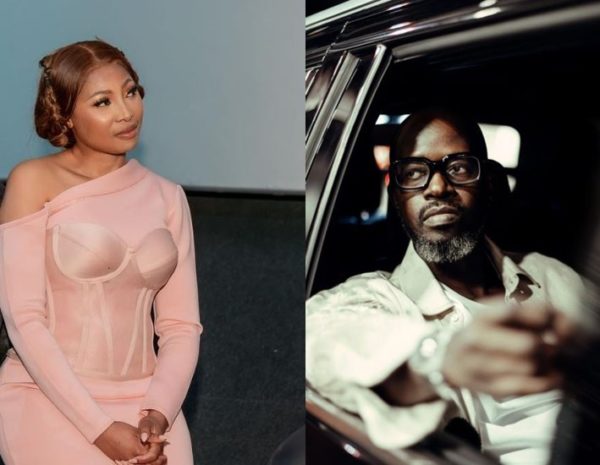
In the wake of a landmark Constitutional Court ruling, the decade-long saga of Enhle Mbali and Black Coffee has taken a sharp turn. The dispute now centers on a singular, high-stakes question: Was there ever a customary marriage?
Black Coffee Breaks His Silence
The tension reignited when Black Coffee commented on a video by podcaster Penuel Mlotshwa. The Grammy-winning DJ stated firmly: “There was no customary marriage.” He claimed that despite the 2011 lobola negotiations and traditional ceremony, the couple never intended to form a customary union, asserting that their 2017 prenup explicitly labeled them as “unmarried” at the time.
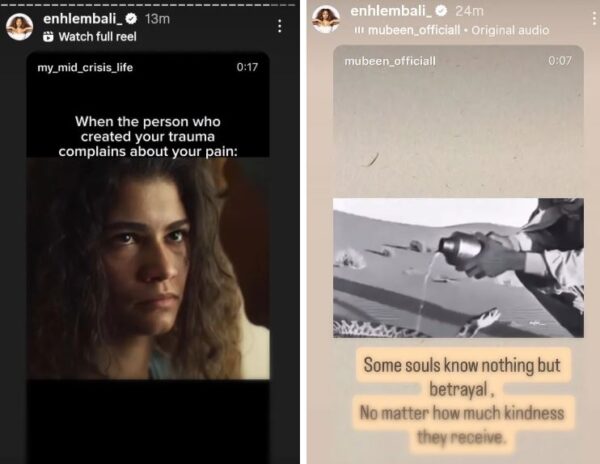
Enhle’s Symbolic Retaliation
While Enhle has avoided direct statements, her Instagram Stories have become a canvas for “subtle but pointed” reflections on betrayal:
- The Trauma Narrative: Sharing a still from Euphoria, the caption read: “When the person who created your trauma complains about your pain.”
- The Snake Metaphor: A viral clip of a man being bitten by a snake he helped was captioned with a warning about souls that know “nothing but betrayal,” regardless of the kindness shown to them.
The Legal Context: Why the “Customary” Label Matters
The stakes are purely financial and legal. A recent Constitutional Court ruling declared that antenuptial contracts signed after a customary marriage are invalid.
- If a customary marriage existed in 2011: The 2017 prenup (which likely favored Black Coffee’s massive estate) would be void, potentially placing the marriage In Community of Property.
- The Current Status: The Johannesburg High Court already invalidated the 2017 contract last year, ordering the DJ to pay over R60,000 monthly in spousal maintenance. Black Coffee’s recent denial appears to be an attempt to protect his assets from further claims based on the new ConCourt precedent.