








By Jimmy Zwane
KwaZulu-Natal’s agriculture sector faces mounting pressure as climate change intensifies, threatening food security and livelihoods in a province that accounts for over 22% of South Africa’s agricultural households. With shifting rainfall patterns and more frequent extreme weather events, farmers are grappling with uncertainty and risk.
Amid these challenges, Indigenous knowledge—cultivated over generations through close observation of the environment—offers valuable, low-cost, and ecologically sound farming methods that promote sustainability. Beyond its environmental benefits, Indigenous knowledge provides a pathway for entrepreneurship and community-led adaptation. However, many government and private initiatives fail to fully integrate these worldviews, perpetuating historical injustices and marginalising Indigenous governance and stewardship.
Agricultural extension officers play a crucial role as intermediaries, linking farmers with essential information, services, and markets. Yet, their training often lacks focus on recognising and incorporating Indigenous knowledge. Extension programmes typically prioritise conventional, input-heavy farming models, leaving officers underprepared to engage with Indigenous practices confidently and effectively.
To address this gap, University of Zululand (UNIZULU) academics Dr Jabulile Mzimela and Prof Innocent Moyo recently led a workshop titled Bridging Climate Change, Agriculture, Indigenous Knowledge, and Entrepreneurship for Resilient Farming Communities in eThekwini Municipality in Pinetown. The workshop brought together agricultural extension officers who explored local climate risks and examined how Indigenous knowledge and entrepreneurship can enhance farming resilience.
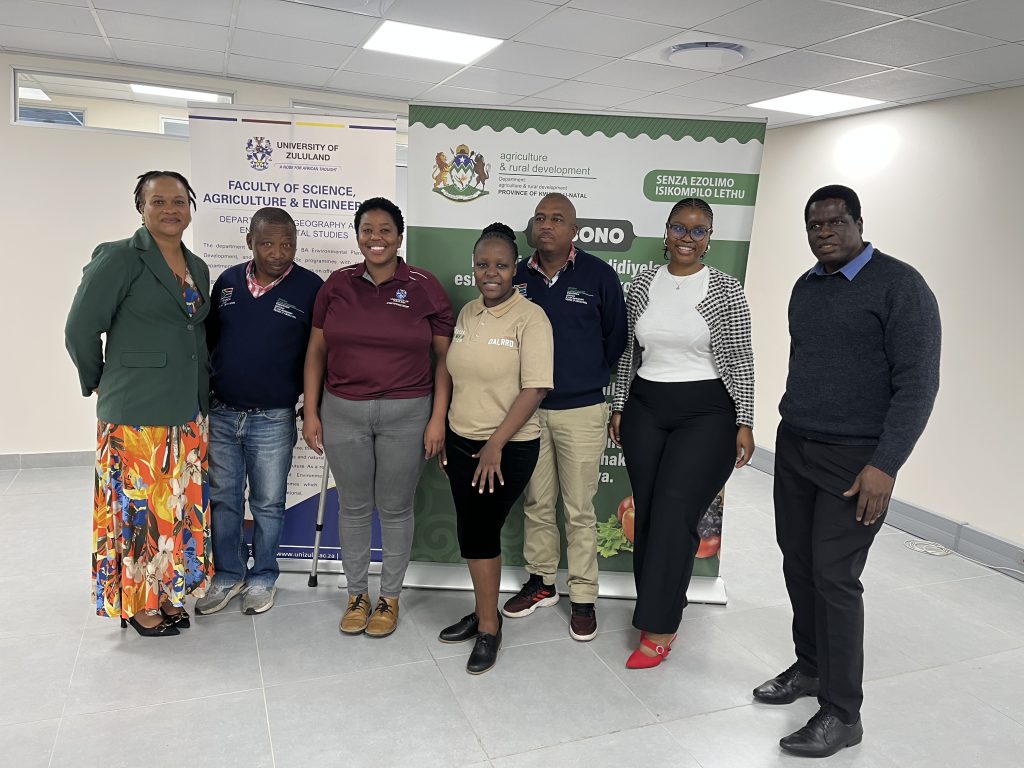
Dr Mosima Mabitsela from UNIZULU’s Department of Agriculture highlighted the potential of underutilised and neglected crops as tools for crop diversification and nutritional security. The workshop combined theoretical insights with practical activities, equipping extension officers with strategies to foster participatory approaches that empower farmers, encourage collaborative learning, and facilitate effective knowledge exchange between scientific and Indigenous systems.
“As extension services become true intermediaries, integrating these approaches can help secure food sovereignty, protect the environment, and support resilient livelihoods,” said Prof Innocent Moyo.
This collaboration exemplifies how bridging modern science and Indigenous wisdom can create adaptive, sustainable solutions for farming communities facing the realities of climate change.
Pictures: Supplied