







By Jimmy Zwane
The University of Fort Hare (UFH), one of South Africa’s most historic institutions, is reeling from a wave of violent protests that have left parts of its campus in ruins and exposed deep political and governance rifts threatening its stability.
The protests, which erupted last week at the university’s Alice campus, caused destruction estimated to be between R300 million and R500 million, with several key buildings, including academic, administrative, and health facilities, severely damaged or destroyed. The unrest has triggered national concern over the future of a university once associated with liberation icons such as Nelson Mandela, Oliver Tambo, and Robert Sobukwe.
Vice-Chancellor Claims Political Sabotage
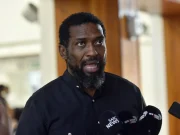
At the centre of the storm is Vice-Chancellor Professor Sakhela Buhlungu, who alleges the unrest is part of a politically orchestrated campaign aimed at removing him and regaining access to lucrative university tenders and resources.
“They want me out of the hot seat,” Buhlungu told IOL in an interview. “So they can take over and plunder university resources.”
The violence last week included the burning of at least seven buildings, among them the student affairs building—which was once a residence for Nelson Mandela—the administration block, the Faculty of Agriculture, and a newly refurbished R16 million clinic. Offices dealing with finance, academic records, and ICT infrastructure were also torched.
Classes have since been suspended, and the university says a decision on when academic activities will resume will be made at the end of the week.
Eight students were arrested in connection with the destruction and have appeared at the Alice Magistrate’s Court, where they were released on warning. They are expected to return to court on 26 November.
“A Broader Agenda”: Crime, Corruption and Violence
Buhlungu, who has been at the helm of the university since 2017 and recently had his contract extended until January 2027, insists the attacks are part of a much wider campaign to destabilise the institution and derail investigations into criminal networks operating within and around the university.
“There are ongoing trials involving murders from 2022 and 2023, and another for fraud and corruption involving 17 individuals and several companies,” he said. “These attacks are a smokescreen. They are creating a sideshow to shift attention from the legal cases.”
He confirmed that the Special Investigating Unit (SIU) has made 33 disciplinary referrals for academic fraud involving university staff and individuals linked to political networks.
Despite the violence, Buhlungu remains defiant: “They can burn buildings, but they’ll never burn the soul of this university.”
Student Leader: “This Is a Governance Crisis”
However, not everyone shares Buhlungu’s assessment. Former SRC president Aphelele Swazi Khalakahla said the unrest reflects legitimate grievances, not political manipulation.
“There’s no functional SRC. The term ended and no new elections were held. Management wants to impose an interim SRC, and that’s unacceptable,” Khalakahla said.
He described the university’s situation as a full-blown governance crisis, alleging that many key administrative positions—such as in financial aid, maintenance, and transport—remain vacant or filled by acting officials.
“Students are living in inhumane conditions,” he added. “In 23 residences, there is no security. There’s sewage spillage, no hot water, no stoves, no fridges. Residences are not up to standard.”
Khalakahla dismissed the vice-chancellor’s claims of political interference as a “convenient political statement” meant to deflect from failures in service delivery and student welfare.
He also questioned the legality of Buhlungu’s contract extension, stating: “According to policy, any post-retirement appointment must be for a minimum of one year. His extension is for a year and five months. That goes against national policy and the university statute. His appointment is unlawful.”
Demands for Transformation and Inclusion
In addition to immediate service delivery concerns, student leaders and community members are also calling for greater local inclusion in university staffing and tender processes.
“We are saying that non-academic and unskilled posts must benefit the Alice community,” said Khalakahla. “This community gave land to the university. They deserve to benefit.”
He also raised concerns about the demographic composition of academic staff, calling for quotas to ensure that at least 60% of professors and lecturers are South African citizens, with no more than 40% being foreign nationals.
“This is not xenophobia,” he insisted. “It’s about transformation and community development. The university must serve the public, not just itself.”
A University Under Siege
The University of Fort Hare, once a beacon of African intellectual excellence, now finds itself at a crossroads. Once known for producing leaders of continental stature, it now struggles with internal divisions, rising criminality, and crumbling infrastructure.
“This is a dress rehearsal for succession,” Buhlungu warned. “Who will want to apply to be vice-chancellor when buildings are burning? We risk chasing away capable academics and attracting those who’ll sell the soul of the university.”
Despite the threats—he has previously survived shootings targeting his home and deputy vice-chancellor—Buhlungu says he remains committed to the institution’s mission.
“There’s work to be done,” he said. “We will rebuild—cleanly, and with integrity. But we will not allow the university to be captured.”
Jimmy Zwane is an education and political affairs journalist reporting on student activism, governance, and higher education reform in South Africa.