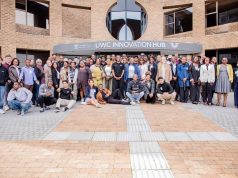







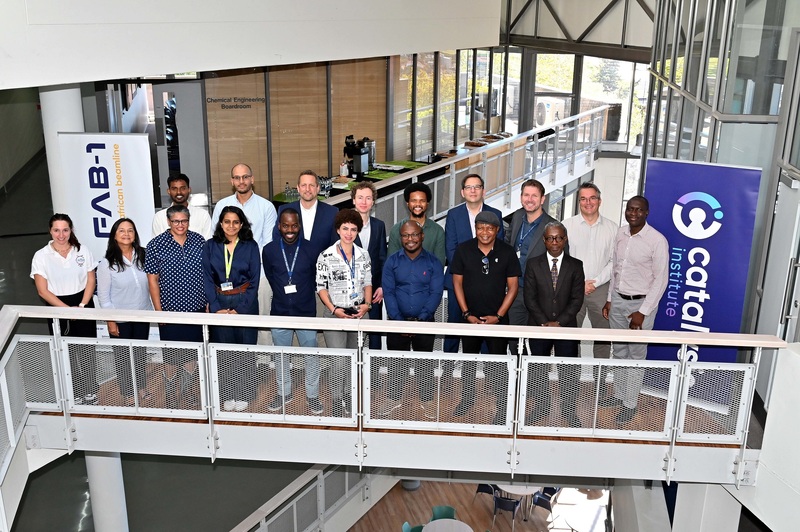
In a historic leap for African science, the University of Cape Town (UCT) has officially launched FAB-1, the first-ever synchrotron beamline to be housed on the African continent. Unveiled on February 27, 2026, this world-class analytical tool marks the end of an era where African researchers had to rely on overseas facilities to conduct high-level materials research.
Housed within the Catalysis Institute in UCT’s Department of Chemical Engineering, FAB-1 is not just a win for the university, but a milestone for “infrastructure sovereignty” across Africa.
What is FAB-1 and Why Does It Matter?
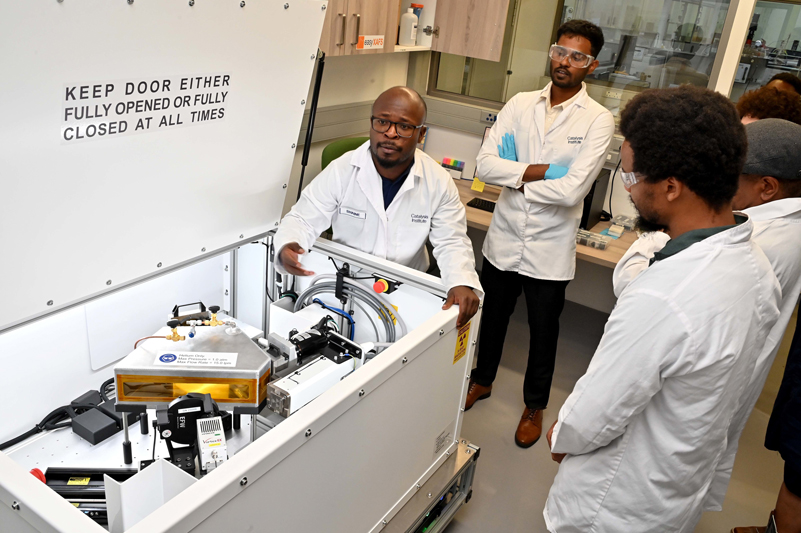
FAB-1 enables a sophisticated technique called X-ray Absorption Spectroscopy (XAS). While standard X-rays show us the “what,” XAS allows scientists to see the “how” at an atomic level.
Explore
The Technical Breakdown: Professor Thokozani Majozi, UCT’s Deputy Vice-Chancellor, explained that FAB-1 utilizes two primary regions of the X-ray spectrum:
- XANES (X-ray Absorption Near Edge Structure): Reveals the oxidation state and electronic structure of an element.
- EXAFS (Extended X-ray Absorption Fine Structure): Determines the local atomic structure, including bond distances and the number of neighboring atoms.
By understanding materials at this granular level, researchers can make massive strides in battery research, green hydrogen catalysis, pharmaceutical development, and environmental science.
Breaking Down Barriers to Discovery
Before the arrival of FAB-1, African scientists faced significant hurdles:
- International Travel: Researchers had to travel to the US, Europe, or Asia to access synchrotrons.
- Bureaucracy: Projects were often delayed by visa applications and the high cost of international travel grants.
- Limited Access: Synchrotrons cost hundreds of millions of dollars to build, making “beamtime” a rare and competitive commodity.
Now, a student in Cape Town or a researcher from across the continent can perform world-class experiments without leaving African soil.
A Shared Resource for the Continent
FAB-1 was funded by the National Research Foundation’s (NRF) National Equipment Programme and supported by a strategic partnership with Helmholtz Zentrum Berlin (HZB).
Professor Nico Fischer, lead of the Catalysis Institute, emphasized that this is an African resource. The partnership with HZB ensures a “genuine exchange” of knowledge, with international experts helping to train a new generation of African scientists to operate and exploit this technology.
Impact on Sustainable Development
The NRF’s Makobetsa Khati noted that this lab-based instrument directly supports UN Sustainable Development Goal 7 (Affordable and Clean Energy). By advancing catalysis research, FAB-1 will help South Africa develop cleaner fuels, more efficient manufacturing processes, and sustainable energy solutions.
“Africa’s first beamline is ready. Let the science begin.” — Professor Thokozani Majozi