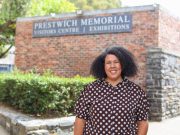


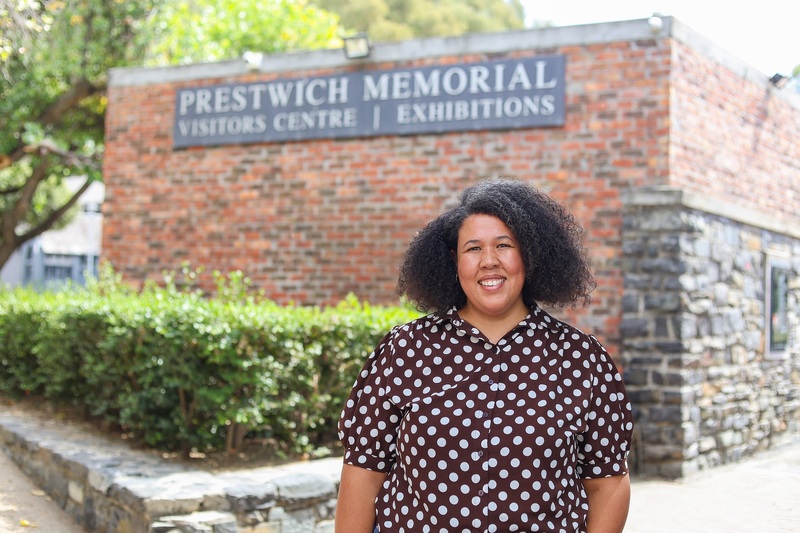
Beneath the humming asphalt and the high-end boutiques of Green Point lies a history written in bone. For centuries, the Prestwich Street Burial Grounds held the remains of those the Cape colony sought to forget: the enslaved, the indigenous, and the laboring poor.
In 2003, the earth was forced open for a luxury development, revealing more than 2,500 individuals. Today, UCT PhD graduand Robyn Humphreys is reframing how we handle these “whispers from the past,” moving the focus from scientific data to ancestral dignity.
From DNA to Decolonization
Robyn’s academic journey took an unexpected turn. Originally planning to conduct DNA research on the remains, she paused after engaging with the descendant communities. She began to ask a fundamental question: Just because we can extract data from these ancestors, does it mean we should?
“I began to question whether it was appropriate… these are the last resting places of enslaved ancestors.” — Robyn Humphreys
The Conflict of “Contract Archaeology”
Robyn’s research shines a light on the 1980s shift toward “contract archaeology,” where historical sites became hurdles for urban development. In this system:
- The Power Trio: Developers, heritage agencies, and archaeologists held the decision-making power.
- The Missing Link: The actual communities connected to the history were often sidelined.
- The Result: Sites like Cobern Street (discovered in 1994) saw remains moved to research facilities, leaving no visible trace or memorial for the public to mourn.
A Victory for Memory: The Prestwich Place Committee
The discovery at Prestwich Street didn’t follow the usual script. Thanks to fierce activism from the Prestwich Place Committee, the exhumation and research processes were challenged.
Instead of being treated as museum “objects,” these ancestors are now part of a memorial in Green Point. While Robyn acknowledges the memorial is “imperfect,” it represents a massive shift: the dead were not objectified by science; they were honored by the living.
The Path Forward: Archaeology in Service of Community
Robyn’s work is a call to action for the next generation of scientists. She argues that:
- Expertise is not Authority: Archaeologists must use their skills to support community goals, not dictate them.
- No One-Size-Fits-All: Some communities view biological research as invasive and disrespectful.
- Knowledge Exchange: We must create spaces where “living memory” is valued as much as “buried artifacts.”
As Robyn prepares to graduate this April, her legacy is a reminder that the earth doesn’t just hold dirt and bone—it holds a sacred account of who we are, and who we have forgotten.