

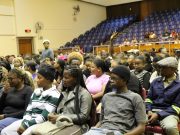


While university is a time for academic growth, for many first-year students at the University of the Western Cape (UWC), it’s also their first encounter with significant financial responsibility.
To bridge the gap between receiving a bursary and maintaining a healthy bank account, UWC’s Centre for Entrepreneurship and Innovation (CEI) launched a high-impact financial literacy programme during Global Money Week (16–20 March 2026).
Challenging the “Soft Life” Narrative
The workshop kicked off with a reality check. When asked whether they preferred the “soft life” now or being debt-free by 40, the room of first-years was unanimous: “Soft life now!”
However, facilitators like Rethabile Phori and UWC alumna Shameema Hayat (Old Mutual) quickly steered the conversation toward long-term stability. The takeaway? You don’t need a fortune to start; you just need a habit.
“Saving something small is better than saving absolutely nothing. Saving as little as R10 per day adds up to R3,650 by the end of the year.” — Shameema Hayat, Old Mutual.

Key Lessons from the Workshop
The five-day programme, held at the Jakes Gerwel Hall, covered the “unwritten rules” of adulting:
- The Power of the Budget: Students were tasked with tracking small daily expenses—like airtime and data—which often “leak” out of a budget unnoticed.
- Good Debt vs. Bad Debt: Facilitators explained that “bad debt” is money spent on things you can’t afford, while “good credit” (like a small, well-managed clothing account) can build a vital credit score.
- The “Black Tax” & Family Influence: Students shared how family expectations often shape spending, such as using a portion of a R15,000 bursary payout to buy groceries for home.
- Legal Literacy: Second-year students were surprised to learn the implications of Marriage in Community of Property, specifically how one becomes legally responsible for a partner’s debt.
The Road to Independence
For students like Lisakhanya Magcwebeba (BSc Mathematics), the workshop provided a much-needed pause on impulsive spending. For others, like Aphiwe Mntambo (BSc Computer Science), it was a lesson in credit health.
To earn their Certificate of Completion, students didn’t just listen—they had to prove their skills by completing a practical budgeting exercise, ensuring they leave the hall with more than just notes, but a plan.