








The University of Pretoria (UP) has officially been selected to anchor South Africa’s leap into the next frontier of deep tech, launching UP Quantum Science and Technology (UPQuST).
Pronounced “UP-Quest,” the collaborative facility serves as one of six nationally funded research hubs under the South African Quantum Technology Initiative (SA QuTI). Backed by the Department of Science, Technology and Innovation over the next five years, the initiative positions UP at the epicenter of developing quantum technologies, cultivating specialized skills, and crafting African solutions to global technological challenges.
Deep Tech, Real-World Impact
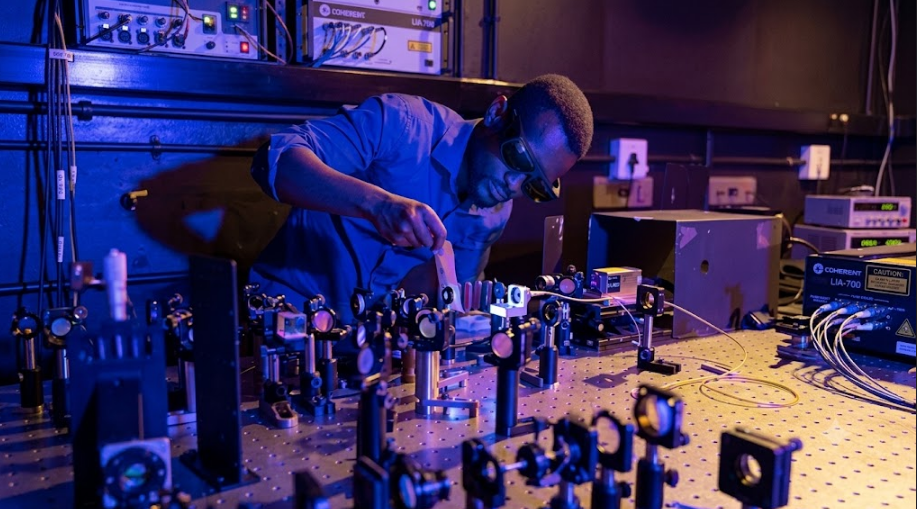
While quantum physics is highly specialized, UPQuST’s interdisciplinary framework spans physics, chemistry, computer science, engineering, and agriculture to build practical tools.
The node will focus heavily on three strategic pillars to transition theoretical research into tangible industrial solutions:
- Quantum Sensing: Engineering ultra-precise sensors capable of detecting deep crop diseases before they become visible to the naked eye and improving deep-earth mineral exploration.
- Quantum Computing: Crafting advanced computational approaches capable of solving algorithms far beyond the capabilities of today’s standard supercomputers.
- Quantum Metrology & Cybersecurity: Revolutionizing digital trust ecosystems by developing quantum-enhanced tools to detect AI deepfakes and analyze sophisticated ransomware threats.
“Quantum technologies are expected to transform industries over the next decade in much the same way that artificial intelligence is transforming society today. Our ambition is to ensure that South Africa participates competitively in the global quantum economy.” — Prof Tjaart Krüger, UPQuST Node Lead
Building the Future Workforce
Beyond infrastructure, UPQuST is set to expand South Africa’s high-tier academic capacity. The node will directly fund postgraduate bursaries, postdoctoral fellowships, and specialized training frameworks.
Crucially, it will expose South African researchers to premier international networks, including active research pipelines connected to the European Organization for Nuclear Research (CERN).