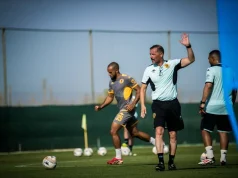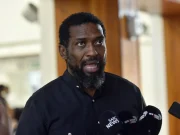










Kaizer Chiefs coach Fernando Da Cruz has explained why he has switched between formations this season, with the French tactician insisting that injuries and opposition profiles are influencing his tactical decisions.
The Amakhosi have largely operated with a 4-3-3 formation since Da Cruz took charge, but Sunday’s 3-2 victory over Siwelele saw the coach make a significant tactical adjustment.
Chiefs lined up in a 5-2-3, with Fiaz Abrahams, Wandile Duba and Mfundo Vilakazi operating as the front three.
The change appeared to give Chiefs additional attacking options while providing greater numbers at the back. More importantly, it produced another three points and moved Amakhosi up to third place in the Betway Premiership.
But is the 5-2-3 the answer to Chiefs’ problems?
Da Cruz explains the tactical switch
Da Cruz says supporters should not necessarily interpret the change as a permanent move away from his preferred 4-3-3 system.
According to the Chiefs coach, injuries have played a major role in determining which formation he uses.
He also believes tactical flexibility is important because different opponents require different approaches.
“For the moment, I’m happy we’re able to play two systems, but for the moment it’s related to the injured players. Sometimes it will also depend on the opponent and the different profile of players,” Da Cruz explained.
That suggests Chiefs could continue moving between systems depending on the players available and the tactical demands of each match.
The 5-2-3 gives Chiefs another attacking option
The switch against Siwelele was particularly interesting because it allowed Chiefs to field three attacking players high up the pitch.
Abrahams, Duba and Vilakazi were tasked with providing the attacking threat, while the midfield and defensive structure attempted to give them the platform to attack.
Chiefs ultimately scored three goals, suggesting that the system can provide attacking rewards.
However, there was one major problem.
They still conceded twice.
And that has become a recurring issue for Da Cruz.
Chiefs’ defence remains the biggest concern
While the attacking side of Chiefs’ game has shown plenty of promise, their defence remains far less convincing.
The Amakhosi have kept just one clean sheet in six matches, highlighting a worrying lack of consistency at the back.
For a team hoping to challenge for silverware, that is a major concern.
Scoring three goals is encouraging, but conceding two means the team is still leaving the door open for opponents.
Da Cruz has already identified what he believes is missing from his defensive unit: leadership, character and personality.
“We have a lack of leadership, lack of character in our defensive line, a lack of personality in our defensive line, so we need to correct that and work a lot,” the coach said.
That admission is significant.
A tactical system can provide structure, but it cannot completely compensate for individual errors, poor decision-making or a lack of defensive leadership.
Can the 5-2-3 solve Chiefs’ defensive problems?
There is an argument that playing with three centre-backs could provide Chiefs with greater defensive stability.
The system gives the team an extra defender and can allow the wing-backs to push forward while still maintaining numbers behind the ball.
But the performance against Siwelele showed that simply adding another defender does not automatically guarantee clean sheets.
Chiefs still conceded twice.
That means the bigger challenge could be improving the players’ defensive discipline and decision-making rather than simply changing the formation.
Da Cruz has a tactical dilemma
The good news for Chiefs supporters is that Da Cruz appears willing to adapt.
Rather than becoming overly dependent on one formation, the coach has demonstrated that he is prepared to change his approach depending on injuries, personnel and the opposition.
That flexibility could prove valuable over a long season.
The danger, however, is constantly changing systems without developing enough consistency.
Players need to understand their roles, movements and defensive responsibilities regardless of the formation being used.
For Chiefs, finding that balance will be crucial.
What system should Chiefs use?
The 4-3-3 remains the system most associated with Da Cruz’s Chiefs, but the successful 5-2-3 experiment against Siwelele has given the coach another option.
The question now is whether the 5-2-3 was simply a response to injuries and the opponent — or whether it could eventually become a regular part of Chiefs’ tactical identity.
For me, the answer should depend less on the formation and more on whether Chiefs can solve their defensive problems.
They have already shown that they can create chances and score goals.
Now they need to learn how to stop conceding them.
If Da Cruz can combine Chiefs’ attacking threat with greater defensive leadership and organisation, Amakhosi could become serious contenders for silverware.
But until that defensive weakness is fixed, changing from a 4-3-3 to a 5-2-3 may only be treating the symptom rather than the problem.
So, which system should Da Cruz stick with — the 4-3-3 or the new-look 5-2-3?