









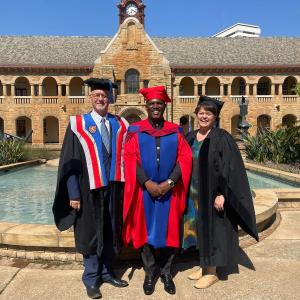
In a significant move for South Africa’s public sector leadership, President Cyril Ramaphosa has officially appointed Dr. Ngobani Johnstone Makhubu as the new Commissioner of the South African Revenue Service (SARS). The five-year appointment, which begins on May 1, 2026, marks a pivotal moment for the institution tasked with the country’s economic backbone.
A Leader Rooted in Trust and Governance
Dr. Makhubu is no stranger to the inner workings of the tax authority. Having previously served as SARS’s Deputy Commissioner for Taxpayer Engagement and Operations, he has been a key figure in stabilizing the organization, enhancing taxpayer relations, and rebuilding public trust.
His appointment is being celebrated by the Albert Luthuli Leadership Institute (ALLI) at the University of Pretoria, where Dr. Makhubu is not only a proud PhD alumnus but also a valued member of their advisory committee.
Bridging Theory and Practice
What sets Dr. Makhubu’s leadership apart is his unique blend of rigorous academic research and high-stakes administrative experience. His doctoral thesis, completed under the mentorship of Professor Derick de Jongh and Dr. Yolande Steenkamp, delved into the complexities of relational leadership.
His research explored:
- The critical role of trust in multi-actor group settings.
- How relational leadership can be enacted in complex, real-world environments.
- Navigating the tensions inherent in public and private sector governance.
By applying these principles to his work at SARS, Dr. Makhubu has demonstrated that effective public administration requires more than just technical tax knowledge—it requires ethical judgment and the ability to foster strong, transparent relationships across various sectors of society.
A New Chapter for SARS
As SARS remains essential to enabling the state’s developmental mandate, Dr. Makhubu’s leadership will be tested by the challenges of ensuring service delivery, fiscal accountability, and economic stability in a shifting landscape.
His journey—from a doctoral candidate navigating complex leadership theories to the Commissioner leading one of South Africa’s most important institutions—serves as a powerful testament to the value of academic insight in the service of the nation.
As he prepares to step into the role on May 1, the academic and professional communities look toward his tenure with optimism, expecting a leadership style that is both contextually grounded and profoundly responsive to the needs of the South African public.