








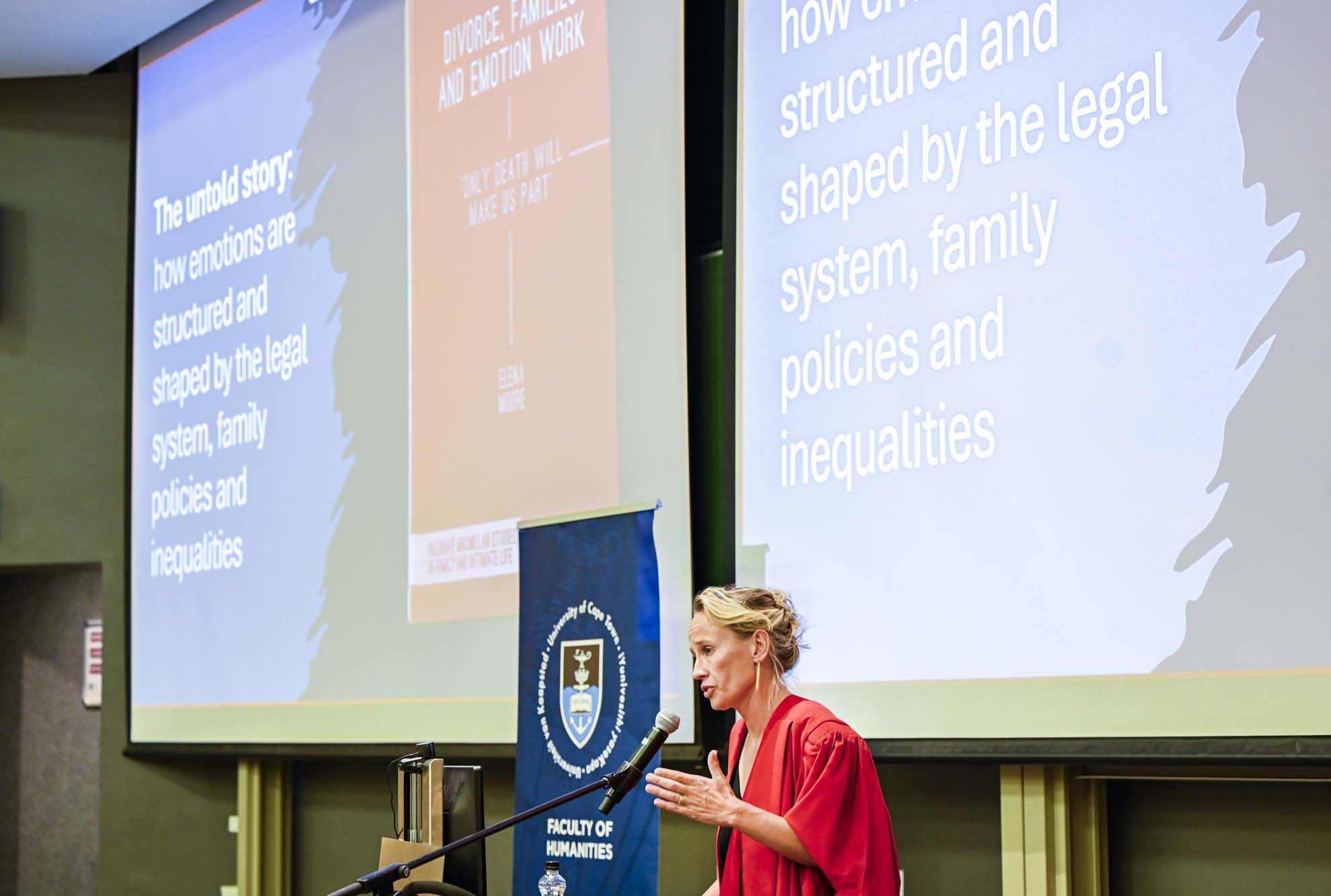
For over two decades, Professor Elena Moore has been pulling back the curtain on the “invisible engine” of society: the labor of caring for the young, the elderly, and the infirm. Her research across Ireland and Southern Africa challenges a long-held myth—that care is merely a private family duty. Instead, she reveals it to be a complex social relation governed by law, history, and systemic inequality.
The “Hidden Cost” of Domestic Life
Moore’s scholarship was sparked by a glaring injustice in Irish divorce courts, where the state consistently undervalued the domestic contributions of women. Upon moving to South Africa, she realized that the Western “nuclear family” model was an even poorer fit for local realities.
- The “Porous” Family: Unlike the isolated nuclear units of Europe, South African families are fluid, stretched across provinces, and bound by multi-generational obligations.
- The Customary Mandate: Moore argues that Customary Law is not a “niche elective” but the very foundation of South African family life. She advocates for its integration into all undergraduate education to ensure justice reflects the lived reality of the people.
The “Who Looks After Granny?” Dilemma
Perhaps the most staggering revelation of Moore’s work is the massive failure in state support for the elderly. Investigating the Care Dependency Grant with a team of 40 researchers across four countries, she uncovered a “Care Gap” that is as much about bureaucracy as it is about finance.
The Barrier to Support: A Statistical Breakdown
| Metric | The Reality for the Elderly |
| Systemic Awareness | Only 15% of qualifying seniors knew the grant existed. |
| Access Success | A heartbreaking 2% of those in need actually received it. |
| Bureaucratic Weight | Applicants had to navigate 5 institutions over 40+ hours. |
| Financial Entry Fee | The process costs between R1,000 and R1,500—often more than the applicant possesses. |
From Evidence to Action: Dismantling the Barriers
Professor Moore’s work is a testament to “Sociology with teeth.” She isn’t just documenting the struggle; she is actively changing the system.
By presenting her data to Parliament alongside the Western Cape Alliance for Older Persons, she secured a seat on a national task team. Today, she works directly with SASSA to strip away the red tape, ensuring that those in “regular need” can access support without a bureaucratic marathon.