









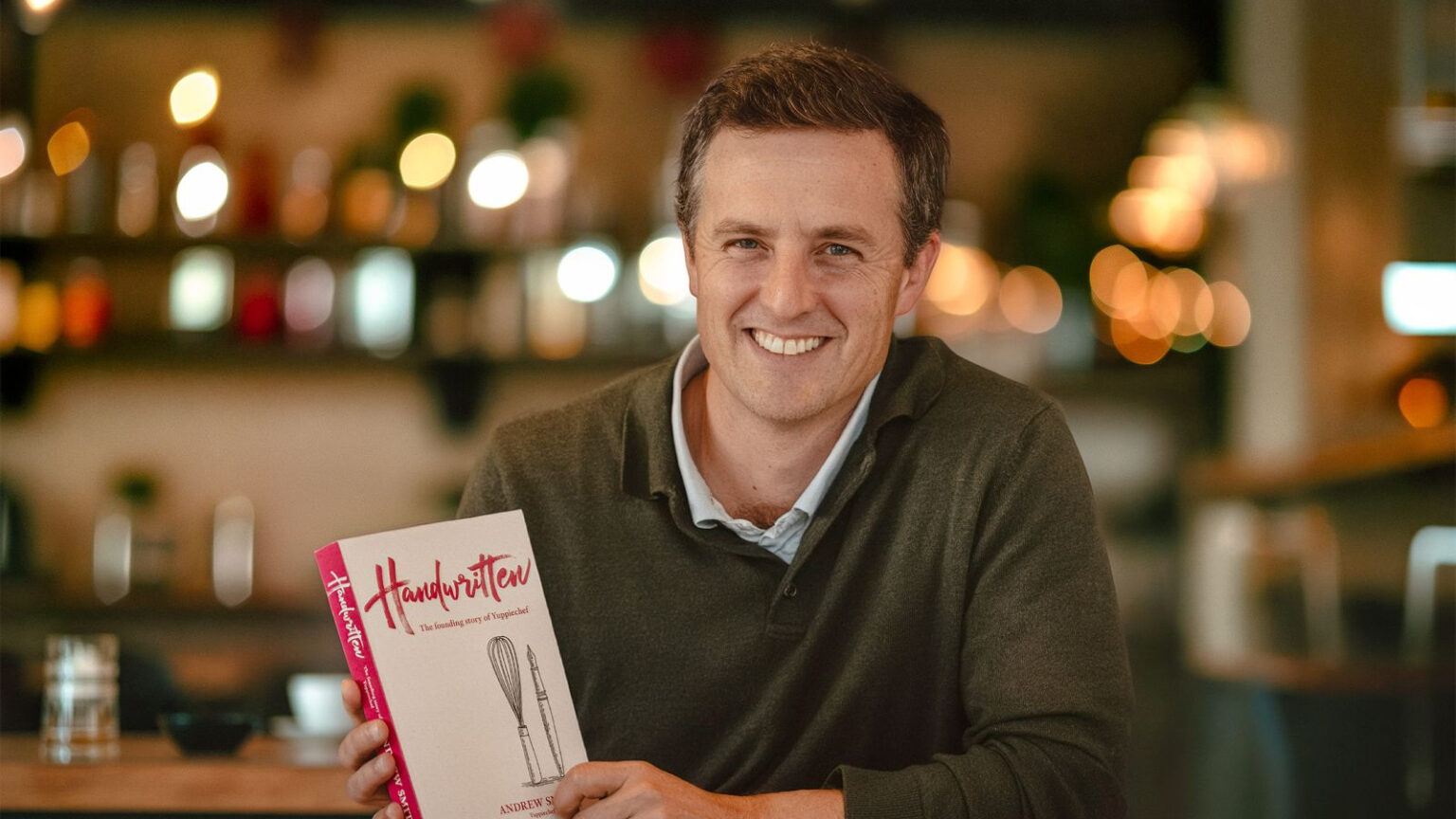
Andrew Smith’s journey to building one of South Africa’s best-known online retail businesses began with a bold decision to leave university and pursue his passion for technology. But the road to success was far from easy.
The Yuppiechef co-founder and former CEO has opened up about the personal sacrifices that came with building the e-commerce company, including a difficult period when he could not afford to take his one-year-old son to the doctor.
Speaking in an interview with Suits & Sneakers, Smith reflected on the early years of the business and the pressure of choosing entrepreneurship over the financial security of a conventional job.
His story eventually led to a major business milestone: Yuppiechef’s acquisition by retail group Mr Price in a deal valued at R402 million.
A promising student who walked away from university
Smith grew up in Pietermaritzburg, KwaZulu-Natal, and attended Hilton College, where he excelled academically. He completed matric in 1998 with seven distinctions.
His interest in computers had developed long before then. He taught himself web design, often spending late nights online using Telkom’s dial-up internet and discounted after-hours rates.
After school, he enrolled at the University of Cape Town to study computer science. However, his time at the institution lasted just three months.
Smith later explained in his memoir, Handwritten: The Founding Story of Yuppiechef, that the course did not match his expectations. He wanted hands-on programming experience but found himself spending much of his time on theoretical work, including writing code on paper.
Growing frustrated with the academic environment, he began skipping lectures to focus on website design. Eventually, he sent his parents a lengthy email explaining his decision to leave university.
Looking back, Smith acknowledged that fear of failure had also influenced his decision. After years of being among the top students at school, struggling with an applied mathematics test was a major blow to his confidence.
He wrote that leaving university was ultimately the right decision for him, but admitted that his original explanation — avoiding wasted time and debt — did not tell the whole story.
From web design to selling Bug Zappers
After leaving UCT, Smith returned to Pietermaritzburg and briefly enrolled in a computer-repair course. That experience also failed to hold his interest.
He then approached The Blue Box, a local graphic design, advertising and multimedia company, offering to work as an unpaid intern. The company’s owner, Paul de Villiers, was impressed during the interview and offered him a paid position.
Smith remained with the company until 2002, when he moved to Cape Town and continued working in website development.
It was there that he crossed paths with Shane Dryden, a graphic designer and marketing specialist who had also relocated from Pietermaritzburg. The pair became neighbours and discovered they shared a desire to move beyond agency work, where income depended on continually finding new clients and selling their time.
They wanted to create a business of their own — something that could generate sales without requiring them to complete a new project for every payment.
In 2005, Smith, Dryden and two other partners dedicated three days to launching an online retail experiment. After considering several product ideas, they settled on an electric fly swatter known as the Bug Zapper.
The business started slowly but eventually generated more than R1 million in sales over eight years. More importantly, it gave the founders practical experience in online retail, from sourcing products and processing payments to fulfilling customer orders.
That experience laid the groundwork for their next venture.
How Yuppiechef was born
In 2006, Smith and Dryden launched Yuppiechef, an online store focused on premium kitchenware.
The idea came from Dryden, who asked a chef friend which kitchen products she considered essential but difficult to find in South Africa. Her recommendation was a pair of Cuisipro kitchen tongs featuring silicone tips.
The founders already had a connection to the local importer of the Cuisipro brand, giving them a way to source products without the expense of opening a traditional retail store.
Yuppiechef officially launched in August 2006 with a catalogue of just 32 Cuisipro products. Its first operating base was Smith’s lounge in Plumstead, Cape Town.
The early operation was modest. The business did not initially offer credit-card payments, relying instead on electronic bank transfers. It also had limited marketing resources and no dedicated team.
The founders continued working in web development to support themselves while building the online store.
One early customer experience would go on to influence the company’s approach to service. In November 2006, Yuppiechef received its first order from someone outside the founders’ personal networks. The customer, Denise Gunner, had purchased a cheese grater.
Dryden included a handwritten thank-you note with the order — a small personal touch that eventually became part of Yuppiechef’s customer-service culture.
Growth, however, was slow. It took the company a full year to reach its first 200 customers, while the founders went five years without drawing full salaries.
The personal cost of building a business
The financial pressure of those early years affected Smith’s family life.
During an interview with Suits & Sneakers, he recalled a particularly difficult moment when his one-year-old son, Jake, became ill, but the family could not afford to take him to a doctor.
Smith said he had kept journals from the age of 18 and later revisited those entries after Yuppiechef was sold. Reading them helped him understand the emotional weight of the sacrifices he had made.
He explained that one of his biggest struggles was knowing that the hardship was connected to a path he had chosen.
He could have pursued a conventional job, he acknowledged, but instead committed himself to building a business — a decision that had consequences for his family and children.
Despite the challenges, Smith continued pushing forward.
In 2008, he brought in former Hilton College classmate Paul Galatis, who had experience in design and marketing. Galatis recalled being told that Yuppiechef was handling roughly five orders a day, could not afford to pay him and was offering an equal share of the business in return for his commitment.
He accepted the offer, joining Smith and Dryden in the effort to grow the company.
From a small online store to a R402 million acquisition
By January 2011, Yuppiechef had grown to seven employees and was beginning to establish itself as a serious player in South African e-commerce.
That year, New York-based investment firm Tiger Global Management acquired a 25% stake in the company, bringing external investment into the business.
Smith later reflected that accepting venture capital had, in hindsight, put the founders on a path that would eventually lead to a sale.
A decade later, that milestone arrived.
On 15 March 2021, Mr Price announced that it had reached an agreement to acquire 100% of Yuppiechef. The transaction received competition approval in July and became effective on 1 August 2021.
Mr Price subsequently disclosed in its 2022 annual financial statements that the acquisition cost R402 million. The payment consisted of R353 million in cash and R49 million in shares.
For Smith, the deal represented the culmination of a journey that began with a small online store, a handful of kitchen products and years of financial uncertainty.
Yuppiechef’s story is a reminder that building a successful business can involve much more than a good idea. It requires persistence, experimentation, difficult decisions and, sometimes, personal sacrifices that are only fully understood in hindsight.