





South Africa has taken a significant step towards strengthening Africa’s artificial intelligence (AI) research capabilities following the launch of a continent-wide initiative aimed at expanding access to advanced AI education across universities.
The programme, known as AI Research Foundations (AIRF), is backed by Google.org and seeks to equip university lecturers and researchers with advanced AI knowledge, enabling them to train the next generation of African scientists, researchers and technology professionals.
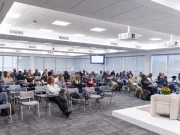
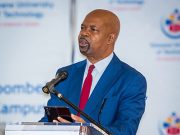
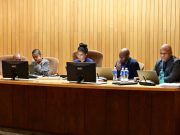
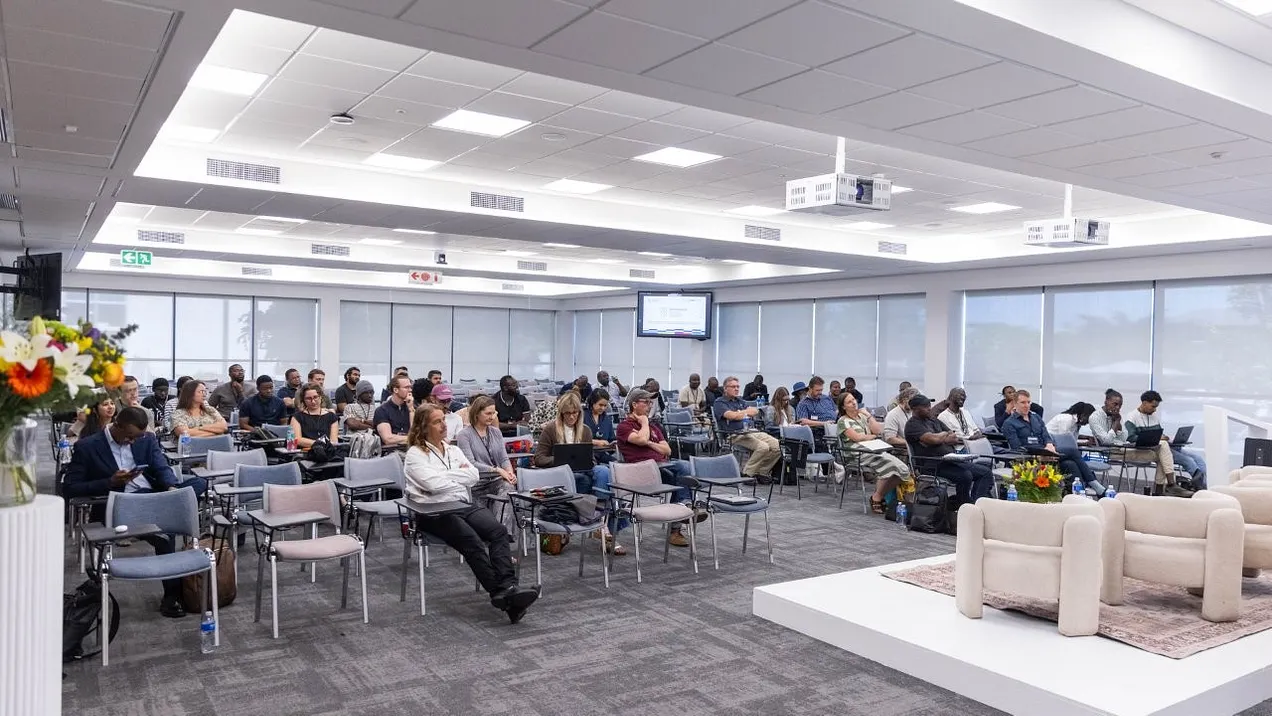
The South African launch took place on 9 November 2026 at the Biomedical Research Institute (BMRI), located at Stellenbosch University’s Tygerberg campus in Cape Town. The event marked the beginning of a five-day training workshop bringing together academics and researchers from several South African universities.
Initiative Targets 30 Universities and 30,000 Students
AIRF aims to reach 30 universities across four African countries: South Africa, Ghana, Kenya and Nigeria. Through the programme, organisers hope to equip approximately 30,000 students with advanced artificial intelligence skills.
South Africa will have ten participating universities, highlighting the country’s growing role in developing Africa’s AI research and innovation ecosystem.
The initiative is supported by Google.org, with Nigeria’s FATE Foundation serving as the main grant holder and the African Institute for Mathematical Sciences (AIMS) South Africa acting as the academic implementation partner.
Google DeepMind developed the AI Research Foundations curriculum, while University College London (UCL) contributed teaching expertise and educational resources.
According to FATE Foundation Digital and Innovation Manager Oluchi Johnson-Achibiri, the focus is now on turning the partnership’s ambitions into measurable results.
She emphasised the importance of moving beyond discussions and commitments towards practical implementation that will benefit students and researchers across the continent.
Advanced AI Training Goes Beyond Basic Digital Skills
Unlike introductory artificial intelligence programmes, AIRF provides more specialised training designed to prepare learners for AI research and development.
The curriculum covers several important areas, including deep learning, neural networks, generative language models and transformer technology.
Participants will also gain practical experience in building and fine-tuning language models while learning about responsible AI development and the ethical considerations surrounding emerging technologies.
An important aspect of the programme is its African-centred approach. The curriculum incorporates contributions from African learners and experts, with research applications addressing scientific, technological and societal challenges relevant to the continent.
The courses are also available free of charge through Google Skills, allowing technical university students, researchers and other interested learners worldwide to access the training materials.
University Lecturers to Drive AI Skills Development
A central component of AIRF is its Train the Trainer model, which prepares university lecturers and researchers to introduce advanced AI education within their respective institutions.
The five-day South African workshop, running from 9 to 13 November, brings together academics from Stellenbosch University, the University of Venda, the University of Mpumalanga, the University of the Free State and the University of the Western Cape.
Beyond technical instruction, participants are receiving training in lecture delivery, teaching-resource development and the application of AI in research.
They will also receive continued support after the workshop to help introduce the curriculum at their universities and supervise student research projects.
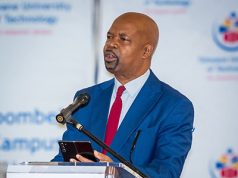
Google South Africa Government Affairs and Public Policy Manager Sipho Mtombeni highlighted the importance of empowering educators to extend the programme’s impact.
He described the training week as the beginning of a wider effort to equip lecturers with the knowledge and resources needed to develop Africa’s next generation of AI researchers.
The Stellenbosch workshop is one of four planned training activities in South Africa, following similar in-person initiatives in Ghana, Nigeria and Kenya.
Google DeepMind Partnership Seeks to Strengthen African Research
AIMS South Africa AI Director Professor Ulrich Paquet described the initiative as an important investment in advancing artificial intelligence research and development across Africa.
He highlighted the ambition to train 30,000 students in foundational AI research, particularly through large language models and responsible innovation.
Paquet also welcomed the programme’s African cultural foundations, noting the importance of building AI education that reflects the continent’s experiences and research priorities.
Meanwhile, Professor Francesco Petruccione, Director of the National Institute for Theoretical and Computational Sciences (NITheCS), stressed that artificial intelligence should help researchers improve the quality of scientific discoveries rather than simply increase research output.
Stellenbosch University’s involvement also builds on its existing commitment to AI research and capacity development.
The university’s Centre for Epidemic Response and Innovation (CERI) has already established research programmes applying artificial intelligence and machine learning to infectious disease research, including pathogen genomics, epidemic intelligence and the prediction of emerging health threats.
CERI researchers participating in the AIRF workshop will help introduce the curriculum across Stellenbosch University in 2027.
CERI Director Professor Tulio de Oliveira welcomed the initiative, emphasising the importance of ensuring that African university researchers and students can use AI responsibly while developing their own models to address healthcare and broader societal challenges.
With support from Google.org, Google DeepMind and academic partners, the initiative represents a significant effort to strengthen Africa’s position in the rapidly evolving global artificial intelligence landscape.
By investing in lecturers, researchers and university students, AIRF aims to build long-term expertise that could accelerate scientific innovation and create new opportunities for Africa’s technology sector.