







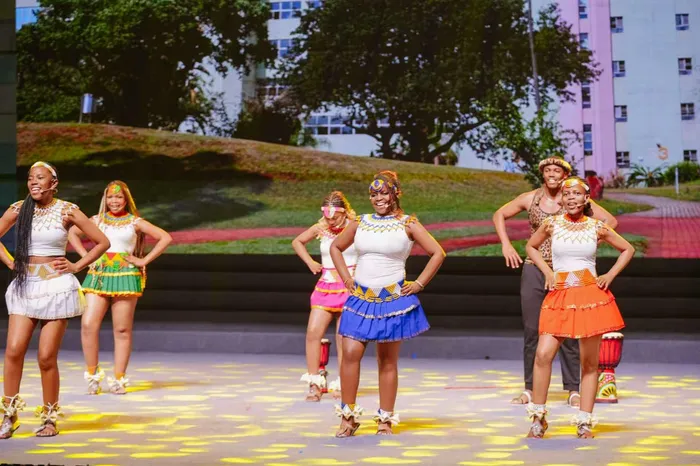
Durban University of Technology (DUT) students have showcased South African culture on an international stage, performing traditional songs and dances during the 90th anniversary celebrations of Fujian Agriculture and Forestry University (FAFU) in China.
The students travelled as part of a 14-member South African delegation participating in the 2026 Chinese Bridge Winter Camp. The group included 10 DUT students studying Mandarin and was led by DUT Confucius Institute director Frank Lin Wu.
Organised through the DUT Confucius Institute in partnership with FAFU, the programme created an opportunity for students to share their cultural heritage while learning more about Chinese language, history and traditions.
One of the highlights was the delegation’s performance at FAFU’s anniversary gala in Fuzhou on 20 October. Dressed in traditional South African attire featuring beaded accessories and headdresses, the students performed alongside their Chinese counterparts.
The event formed part of celebrations marking 90 years since the university’s establishment in 1936, bringing together Chinese and international students.
DUT students make South African culture shine in China
For Queen Mwandla, a third-year Fashion Design and Textiles student who is also studying Level 2 Mandarin, performing before a Chinese audience was an unforgettable experience.
Although she initially worried that cultural differences might make it difficult for the audience to connect with their performance, the reception exceeded her expectations.
“But it was exciting and made me more proud of my culture than ever. At home, Zulu culture feels normal, but in China it felt special. The audience loved it because it was different and full of energy,” Mwandla said.
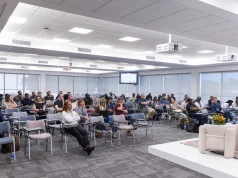
The students’ participation also reflected the wider purpose of the winter camp, which aimed to strengthen cultural understanding and connections between young people from China and Africa.
The camp officially opened at FAFU on 18 October under the theme, “Blessings gather in Fuzhou, China and Africa with one heart”.
FAFU International Office director Fu Chaobo welcomed the South African delegation and spoke about his own connection to Durban, which he described as another home.
He highlighted the importance of having the students actively participate in the university’s anniversary celebrations rather than simply attending as guests.
Fu described the event as “the golden opportunity for you to showcase your culture from Africa” and encouraged the delegation to share their language and traditions while building relationships with Chinese students.
Cultural exchange strengthens China-South Africa friendship
Speaking on behalf of the participants, Maxine Kekana reflected on how taking part in a Chinese Bridge language competition had strengthened her interest in China.
“The competition taught me many things and made me fall in love with China even more,” she said.
Kekana also expressed appreciation for the opportunity to attend the winter camp and take part in FAFU’s anniversary celebrations during the China-Africa Year of People-to-People Exchanges.
As a symbol of friendship between the two countries, the South African delegation presented the university with a painting featuring Fuzhou’s jasmine flower and South Africa’s national flower, the protea.
The artwork represented the cultural connection between the two nations and the friendships developed during the exchange programme.
DUT students explore China’s technology, history and culture
Beyond the anniversary celebrations, the winter camp exposed the students to different aspects of Chinese society, including education, technology, history and everyday life.
In Fuzhou, the delegation visited the International College of Juncao Science and the National Engineering Research Centre of Juncao Technology.
During these visits, students learned how specially cultivated grasses can be used to grow mushrooms, provide livestock feed and help prevent soil erosion.
They also met Professor Lin Zhanxi, the scientist behind Juncao technology, which has previously been introduced in KwaZulu-Natal.
The programme included visits to a robotics company, Fuyao University of Science and Technology, a jasmine tea cultural centre and the historic Sanfang Qixiang neighbourhood, also known as Three Lanes and Seven Alleys.
The group later travelled by train, including high-speed rail services, to Quzhou and Hangzhou. Their itinerary included historical and cultural attractions such as the Confucian Temple in Quzhou and West Lake in Hangzhou.
The students also made a brief visit to Beijing before returning to South Africa.
China experience inspires DUT student to pursue Mandarin further
For Mwandla, the opportunity to experience China in person was particularly meaningful after years of admiring its culture from a distance.
“I have loved Chinese culture from afar for so long, so tasting the food, visiting museums, and seeing places I had only seen on social media with my own eyes was so impactful and memorable,” she said.
Throughout the trip, students had opportunities to practise Mandarin with local residents, interact with Chinese students and form friendships beyond the classroom.
Mwandla said the experience had strengthened her motivation to improve her Mandarin skills and explore further academic opportunities in China.
“I want to return and have a real conversation without my translator app. I am so grateful for this opportunity. It has inspired me to pursue studying Mandarin and even doing my postgrad and living in China one day, because I can truly see myself there,” she said.
The exchange programme gave the DUT students more than an opportunity to perform abroad. It allowed them to represent South Africa, develop their language skills and build connections through shared cultural experiences.
Their participation in FAFU’s 90th anniversary celebrations also highlighted the role of education and student exchanges in strengthening relationships between South Africa and China.