









By Jimmy Zwane
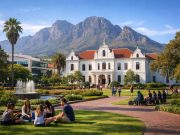
STADIO Higher Education has officially launched its new Durbanville Campus in Cape Town, welcoming its first cohort of students in February 2026.
The privately owned institution will accommodate 4,000–5,000 contact-learning students, offering 20 qualifications across seven academic schools, including Education, Information Technology, Law, Media and Design, Commerce, Architecture, and Engineering. Students will be able to pursue higher certificates, undergraduate degrees, and postgraduate qualifications.
The campus features 29 classrooms, modern laboratories, and a 1,000-seat multipurpose hall, alongside a Centre for Academic Success that includes a library, study spaces, and student support services.
Two engineering laboratories—equipped with 3D printers, mechatronic systems, and renewable-energy technologies—will support new programs in Mechatronics and Renewable Energy, launching in 2026, with additional facilities and degrees planned for 2027. The IT lab promises an interactive, high-tech learning environment.
Beyond academics, STADIO has invested in student wellbeing and recreation, providing netball courts, multi-use sports facilities, and rugby fields. Designed by BPAS Architects, the campus also incorporates sustainable features such as rainwater harvesting, water-efficient landscaping, and pedestrian-friendly pathways.
According to STADIO CEO Dr. Stan du Plessis, the campus represents a cornerstone in the university’s long-term vision to establish a vibrant tertiary education hub in northern Cape Town.
“Private higher education plays a crucial role in South Africa’s development,” Du Plessis said. “We can innovate, partner closely with industry, and offer flexibility that traditional universities often can’t. Our goal isn’t to compete with public institutions but to complement them—expanding national capacity and giving students more choice.”
While the Durbanville campus enhances STADIO’s contact-learning offerings, Du Plessis emphasized that the institution’s blended and distance-learning model remains central to its strategy—ensuring that students across the country can access quality education without needing to relocate.
“Durbanville strengthens our physical presence but also anchors a hybrid network that reaches students everywhere,” he said.
Addressing South Africa’s Education Challenges
Du Plessis pointed out that South Africa’s higher-education challenges stem less from funding shortages and more from inefficient outcomes.
“South Africa spends a higher share of its national income on post-school education than many wealthier countries,” he noted. “But graduate output and employability remain low. The issue isn’t investment—it’s how effectively we use the resources we already have.”
He argued that private institutions can help close this gap by designing programs aligned with the job market and investing in integrated academic ecosystems rather than fragmented campuses.
“The Durbanville campus shows what it means to invest wisely—building world-class infrastructure that will serve thousands of students for decades,” he added.
STADIO’s approach, Du Plessis explained, prioritizes affordability and access over exclusivity.
“Efficiency isn’t about cutting costs—it’s about freeing up resources to expand opportunity. We deliberately avoid pricing ourselves at the elite end. To truly serve the nation, education must remain accessible, and that requires smart systems behind the scenes.”
The Durbanville Campus is set to become a flagship model for sustainable, accessible, and industry-aligned private higher education in South Africa.