


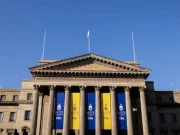







The University of Pretoria (UP) has strongly dismissed claims that it enforces an informal or “unwritten rule” to restrict the hiring of academic staff from other African nations and international territories.
The university’s response follows intense scrutiny stemming from a Parliamentary Portfolio Committee on Higher Education and Training meeting held in March 2026. During the session, lawmakers raised sharp concerns regarding the institution’s employment of a significant number of foreign nationals, particularly flagging potential compliance issues with South Africa’s Employment Services Act and Immigration Act.
The Parliamentary Probe: Compliance, Demographics, and Labor Concerns
The legislative inquiry into UP’s human resource structures centered on several critical points raised by both committee members and organized labor unions:
- Data Breakdown: Parliament criticized the university for failing to provide a clear, structured breakdown of its staff complement, which is necessary to evaluate the classification, qualifications, and contract permanence of international personnel.
- Critical Skills Verification: Questions were raised over whether specific roles occupied by international staff truly fell under “critical skills” frameworks, or if qualified domestic candidates were being systematically overlooked.
- Labor Friction: Organized labor highlighted a disproportionately high representation of international academics within specific departments, such as the Faculty of Law, passing on grievances from local doctors and professors who claimed they were passed over.
- Skills Transfer: Concerns were leveled against long-term contract extensions for international staff spanning decades, allegedly without clear evidence of structured skills transfer to local South African academics.
The Evolution of UP’s Hiring Demographics
The roots of the current demographic debate trace back over two decades of aggressive institutional transformation. Facing immense pressure to diversify its historically white academic staff, the university prioritized the appointment of Black academics.
Because domestic output struggled to meet early transformation demands, the institution heavily recruited top-tier Black academics from across the African continent. This successful talent acquisition drive significantly grew UP’s international footprint, though it also birthed unverified social media rumors falsely claiming that foreign nationals made up 80% of the university’s staff.
While critics allege the March 2026 parliamentary meeting served as a watershed moment that forced an “unwritten rule” prioritizing South African citizens (Black citizens first, followed by white citizens), the university maintains its processes remain entirely policy-driven.
Merit, Equity, and Policy: The University’s Official Stance
Rejecting any assertions of unofficial hiring quotas or national bans, the University of Pretoria clarified to the press that its talent acquisition follows a strict, legally compliant framework.
“Appointments are based on merit, while also taking into account the University’s Employment Equity Plan and applicable South African legislation,” the university stated, emphasizing that all applicants are vetted fairly against official institutional needs.
UP further highlighted its pride in maintaining a globally diverse academic community, reinforcing that international scholars continue to play a foundational role in driving the university’s teaching, world-class research output, and technological innovation.