



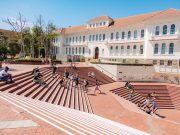


South Africa’s higher education crisis has hit a staggering peak at Walter Sisulu University (WSU). For the 2026 academic year, the rural Eastern Cape institution was forced to reject approximately 500,000 applicants—leaving half a million hopeful students in limbo.
The primary culprit? A severe lack of infrastructure and a perceived absence of government support that has left the university unable to scale its capacity despite record-breaking demand.
The Capacity Crisis: By the Numbers
WSU Council Chairperson Advocate Tembeka Ngcukaitobi laid bare the university’s struggles during a parliamentary oversight visit on February 2, 2026.
- Total Applications: Over 500,000.
- Available Spaces: Only ~7,000.
- The Constraint: Inflexible enrollment plans and deteriorating physical facilities.
- The Potential: Ngcukaitobi argued that with proper digital and physical investment, WSU could accommodate up to 60,000 students through a “virtual walls” (blended learning) model.
A Sector-Wide Infrastructure Shortfall
WSU’s struggles are a microcosm of a national multibillion-rand crisis. While urban giants like Wits and UJ were crippled by water supply failures and explosions at treatment plants in early 2026, rural institutions face a different set of hurdles:
- Land Ownership Deadlocks: WSU currently does not own its land; it belongs to the Department of Public Works, which has reportedly delayed development and refurbishments.
- Budgetary Constraints: Of the R100.4 billion total university budget for the 2026/27 cycle, only R1.246 billion is allocated for repairs and upgrades nationwide—a mere fraction of what is required to maintain aging facilities.
- Digital Divide: The absence of fiber connectivity and modern ICT labs at rural campuses like WSU’s Komani site is actively hindering research and student success.
The Shift to Private Education
As public infrastructure falters, students are increasingly turning to Private Higher Education Institutions (PHEIs). In 2026, private enrollment surged to over 300,000, with major players like STADIO and ADvTECH seeing significant growth.
The Risk: Students opting for private education often do so to avoid the quality-of-education compromises caused by failing public infrastructure. However, the high cost of private tertiary education remains a barrier for the very impoverished communities that WSU was designed to serve.
The Economic Backdrop 2026
The rejection of 500,000 students comes at a time when the South African labor market is at its tightest.
- Projected National Unemployment: 32.50% (2026).
- Graduate Unemployment: 10.4% (February 2026).
- Vocational/Technical Unemployment: 37.7%, despite a critical national skills shortage in these sectors.