



South African higher education is facing a massive transformation and accountability shake-up. Members of Parliament (MPs) are demanding intense scrutiny over university hiring practices after the Department of Higher Education and Training (DHET) admitted to a glaring data gap regarding its foreign academic workforce.
During a tense parliamentary committee meeting on June 24, 2026, the DHET conceded it cannot accurately track the exact immigration statuses—including critical skills visas, permanent residencies, or naturalization details—of thousands of foreign academics lecturing at local universities.
The Numbers Driving the Debate
According to audited data from 2024 presented by the department, there are currently 6,739 foreign academic staff members employed across South African universities.
The data revealed a highly concentrated demographic footprint:
- Zimbabwean nationals make up the largest block at 27%.
- Nigerian nationals follow as the second-largest group at 14%.
The debate reached a boiling point when MPs recalled recent briefings from institutions like the University of Cape Town (UCT), where lawmakers expressed deep concern that foreign national academics outnumbered Black African, Coloured, and Indian academics combined at the professor level—a reality UCT officials themselves labeled “unacceptable.”
“Breaking the Law, Not Exercising Academic Freedom”
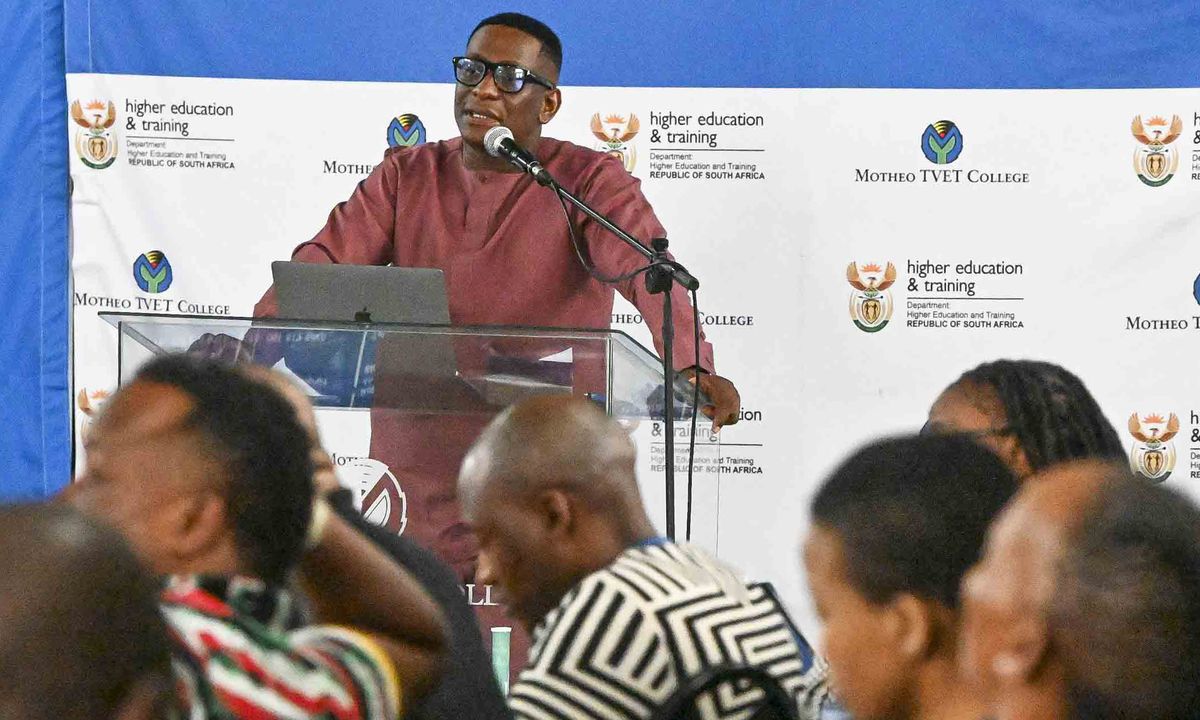
Higher Education Minister Buti Manamela issued a stern warning to university councils, reminding them that the Immigration Act makes it a criminal offense to employ anyone without valid work documentation.
“Any institution that breaches these requirements is not exercising academic freedom. It is breaking the law, and it will be treated accordingly,” Manamela stated firmly, emphasizing that South Africans and permanent residents must be prioritized.
However, the definition of “prioritization” sparked fierce political sparring. Patriotic Alliance MP Ashley Sauls openly challenged the minister, arguing that naturalized citizens and permanent residents should not hold the same employment transformation priority as South Africans by birth. Sauls accused the DHET of “intentionally using the law to give foreign nationals jobs that South Africans are able and qualified to do.”
DHET Deputy Director-General, Dr. Thandi Lewin, strongly rejected claims of intentional bias, pointing to institutional data challenges. While Stellenbosch University was praised for providing a clear, transparent four-slide breakdown of its visa data, Lewin admitted the broader national dataset compiled with Universities South Africa (USAf) remains “not a great data set.”
Global Benchmarks vs. Local Transformation
The clash has reignited the delicate balance between aggressive local employment transformation and international academic collaboration.
Defending the presence of international scholars, Dale McKinley of Kopanang Africa Against Xenophobia noted that South Africa’s percentage of foreign-born academic staff remains relatively low compared to developed nations. He warned that moving toward an isolationist approach would be highly undesirable for global research and academic mobility.
Moving forward, the parliamentary committee has demanded that universities provide concrete, auditable evidence that no suitably qualified South African was available before any foreign national is appointed to an academic post.