









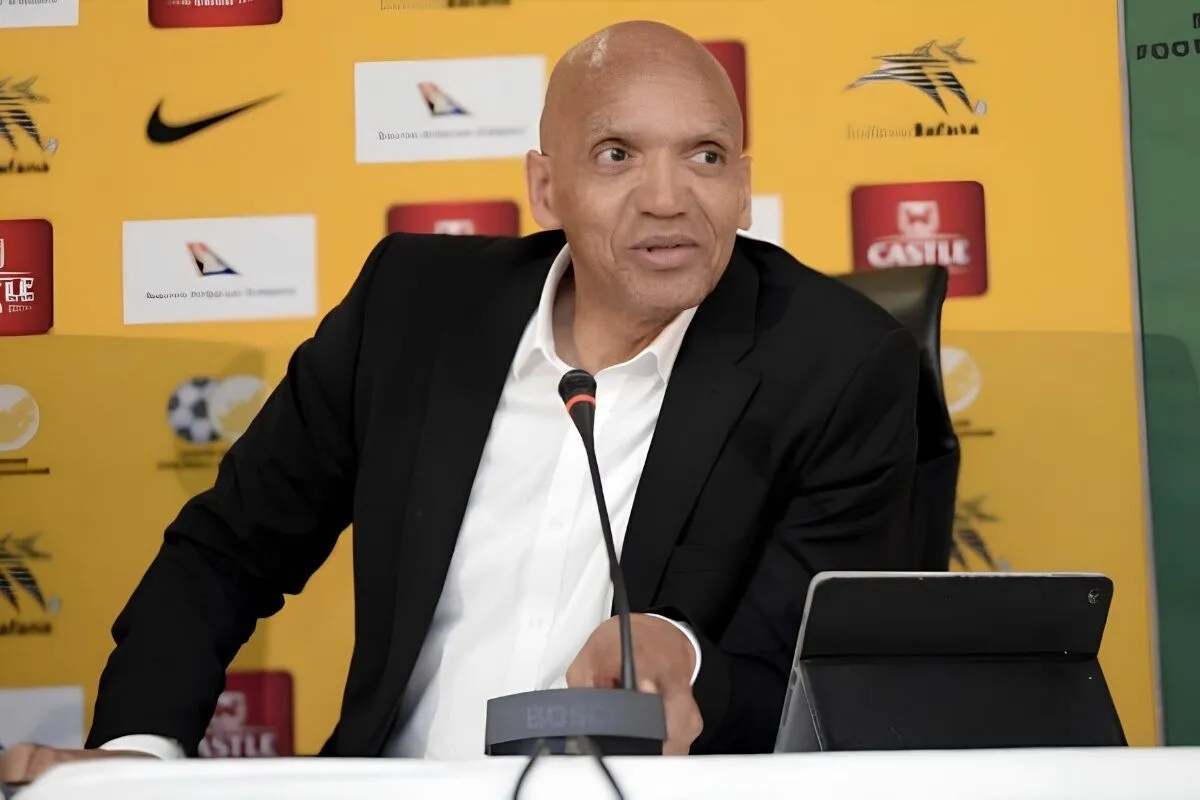
Former SAFA CEO Dennis Mumble believes the biggest issue facing the South African Football Association goes beyond Saturday’s presidential contest between incumbent Danny Jordaan and challenger Sandile Zungu.
With SAFA preparing for a closely watched leadership vote, Mumble has questioned whether the organisation’s current constitutional and electoral framework is capable of delivering a genuinely balanced election.
Rather than focusing solely on which candidate should win, Mumble argues that SAFA needs to examine the system itself — and potentially undertake a complete governance overhaul.
Mumble Questions Whether SAFA Elections Can Be Truly Fair
Mumble has been particularly critical of the SAFA Constitution, arguing that its current structure creates an imbalance of power within the organisation.
In his view, changing the leadership alone will not address the underlying problems.
Speaking to Newzroom Afrika, Mumble argued that the Constitution needs to be redesigned if SAFA is serious about creating a fairer electoral environment.
He described the existing constitutional framework as unsuitable for conducting what he considers a genuinely fair election and questioned whether it meets the governance standards expected by FIFA.
For Mumble, the debate should therefore extend beyond Jordaan and Zungu and focus on how SAFA is structured and governed.
Concerns Over SAFA’s Governance Structure
One of Mumble’s central arguments is that too much authority is concentrated within certain parts of the organisation.
He also questioned the responsibilities of SAFA’s standing committees, suggesting that some of their roles are not sufficiently clear within the association’s statutes.
The Governance Committee was one area he highlighted.
While the committee is intended to provide guidance on governance matters, Mumble questioned whether its practical role has become too closely associated with the administration of elections.
His concerns raise a broader question about the checks and balances within SAFA and whether the organisation’s structures provide enough independence and accountability.
Why Incumbents May Have an Advantage
Mumble also pointed to the way SAFA’s electoral process develops from the grassroots level upwards.
Support for candidates is not built only in the final stages of a presidential contest. Local and regional structures play an important role in determining the makeup of the national electoral process.
According to Mumble’s argument, this can potentially give an incumbent an advantage because a sitting president has more opportunity and time to establish support throughout those structures.
That dynamic, he suggests, can make it considerably harder for a challenger to compete on an equal footing.
The issue is particularly relevant ahead of Saturday’s contest, with Jordaan seeking to retain the presidency while Zungu attempts to bring about a change in leadership.
Jordaan vs Zungu Is Only Part of the Bigger Debate
Regardless of who emerges victorious, Mumble believes SAFA will still face important questions about governance.
A victory for Zungu would represent a major change at the top of South African football, while another Jordaan term would extend his leadership. But Mumble’s argument is that neither outcome would automatically resolve the structural concerns he has raised.
He believes SAFA should ultimately reconsider its Constitution and redesign its governance framework to create clearer responsibilities, stronger checks and balances, and a more equitable electoral system.
That makes Saturday’s election more than simply a contest between two presidential candidates. It is also taking place against a wider debate about the future direction and governance of South African football.
Will SAFA Reform Its Governance Model?
Mumble’s intervention places the spotlight on an issue that could remain relevant long after the votes have been counted.
Whether Jordaan retains the presidency or Zungu produces an upset, SAFA will face continued scrutiny over how its electoral system operates and whether its constitutional framework provides the foundation for effective governance.
For Mumble, meaningful change requires more than replacing one president with another.
He believes the organisation must first look at the rules governing its own power structures — and that could mean rewriting the SAFA Constitution from the ground up.
Do you agree with Dennis Mumble that SAFA needs a constitutional and governance overhaul? And can either candidate deliver meaningful change?