




The University of Cape Town (UCT) is leading a new five-country research consortium that aims to put advanced microscopy technology directly into the hands of African scientists studying some of the continent’s most serious infectious diseases.
The four-year openScopes AIDDiA (Advancing Infectious Disease Discovery Research in Africa) programme has received a £4.4 million grant from Wellcome through its Bioimaging Technology Development Awards.
The initiative brings together researchers from South Africa, Kenya, Uganda, Côte d’Ivoire and the United Kingdom to develop, deploy and maintain open-source imaging technologies for infectious-disease research.
It is the only project among the nine funded in the latest Wellcome round to be led from outside the UK.
Building African capacity for disease research
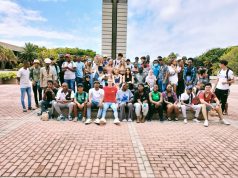
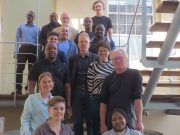
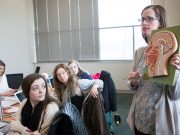
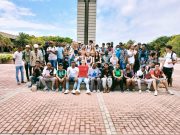
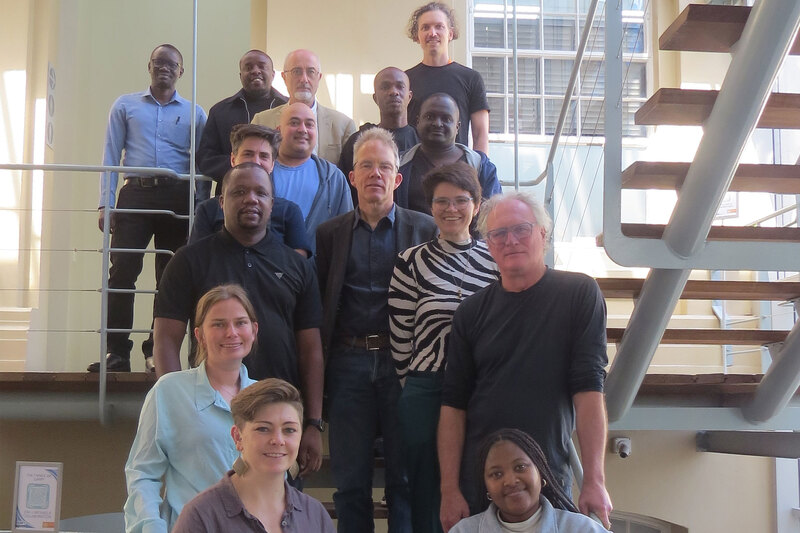
The programme officially launched with a consortium meeting at UCT’s Institute of Infectious Disease & Molecular Medicine (IDM) from 7 to 11 September.
UCT is working with the Kenya Medical Research Institute (KEMRI), Mbarara University of Science and Technology (MUST) in Uganda, the Centre Suisse de Recherches Scientifiques (CSRS) in Côte d’Ivoire and Imperial College London.
The project builds on the openFrame, an open-source microscope platform developed by collaborators at Imperial. Prototype instruments developed through earlier Wellcome funding will now be refined and adapted for deployment across the African research network.
Microscopes will be installed at the four African partner institutions, while Imperial will maintain comparable systems to help develop imaging methods and provide technical support.
Bringing advanced microscopy closer to patients
The programme is designed around a simple principle: researchers working closest to infectious diseases should have access to the tools needed to investigate them.
Diseases including tuberculosis, malaria and Buruli ulcer continue to place a major burden on African communities. Yet sophisticated imaging equipment and the expertise required to operate it are often concentrated in laboratories far from where patients and clinical samples are located.
That can leave researchers primarily responsible for collecting samples before sending them elsewhere for advanced analysis.
OpenScopes AIDDiA aims to change that model by making imaging technology, training, reagents and standardised research protocols more accessible to local research teams.
Dr Caron Jacobs, one of the consortium’s co-leads, said the programme will allow scientists working closest to these diseases to take a greater role in discovery research.
Mobile and customised microscopes
The initiative will deploy two types of open-source imaging systems.
TravellerScopes will be used as mobile platforms, moving between regional research facilities from national hubs. The aim is to expand access and allow researchers to begin experiments closer to where samples are collected.
More advanced microbeScopes will then be customised for research priorities at each partner institution.
Because the systems are modular and open source, researchers will be able to repair, modify and upgrade the equipment rather than depending entirely on commercial suppliers.
The programme will also provide training and materials in both English and French, helping establish a broader research community across anglophone and francophone Africa.
TB research will be an early focus
Tuberculosis will serve as one of the programme’s first major research areas.
Researchers in countries including South Africa and Kenya will use advanced imaging to study mycobacteria at single-cell level and examine how the pathogen responds to treatment and immune pressure.
The project also aims to develop approaches suited to environments where consistent electricity, cold storage and access to specialised biological reagents cannot always be guaranteed.
Researchers will therefore investigate label-free imaging techniques that can identify pathogens through their natural optical properties, alongside labels designed to remain stable under local conditions.
Combining microscopy with machine learning
The project is also incorporating artificial intelligence and data analysis from the outset.
At MUST, Dr William Wasswa is leading work on image analysis and machine learning. The team will develop data-management pipelines and computational tools capable of extracting useful information from the large volumes of imagery generated by the microscopes.
One application will be investigating drug resistance in TB bacteria at the single-cell level.
The approach is intended to ensure that researchers do not simply generate images, but can turn those images into usable scientific evidence while retaining the necessary expertise within their own institutions.
Each partner brings a local research priority
The consortium has assigned research leadership according to disease priorities at each African partner institution.
- UCT: Tuberculosis
- CSRS: Buruli ulcer
- MUST: Malaria
- KEMRI: Neglected and emerging infections
- Imperial College London: Technology development, optimisation and support
The partners will share technologies, methods and data across the network.
The broader ambition is to establish a sustainable African bioimaging community that can continue developing and applying these tools beyond the four-year funding period.
Rather than creating a research network that depends permanently on external laboratories, openScopes AIDDiA is designed to leave participating institutions with the equipment, skills and collaborative infrastructure needed to continue the work independently.