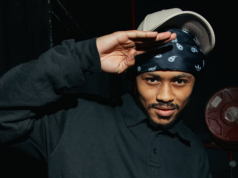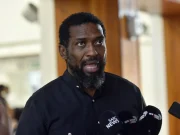








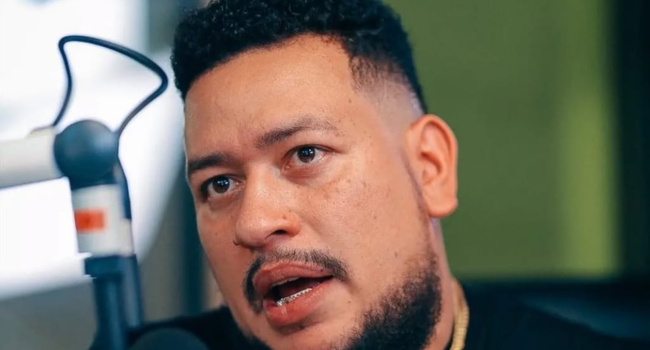
The murder trial of South African rapper AKA and his friend Tebello ‘Tibz’ Motsoane is now underway at the Durban High Court, with prosecutors relying heavily on CCTV footage, ballistics and forensic evidence to build their case.
Seven men are facing charges connected to the February 2023 killings. All seven accused have pleaded not guilty to the charges against them.
The trial began on 5 October 2026 and is expected to continue into November, with the possibility that the proceedings could take considerably longer to conclude.
Among those facing trial are the Ndimande brothers, who were extradited from eSwatini following lengthy legal proceedings.
CCTV evidence takes centre stage
One of the key aspects of the State’s case is CCTV footage tracking the movements of individuals before the shooting.
A technical detective testified that he identified accused number four, Mziwethemba Gwabeni, as the person allegedly seen following AKA after his arrival at King Shaka International Airport.
The detective also linked the movements to vehicles, including a grey BMW and a grey Volkswagen Polo, according to the evidence presented in court.
Another accused, Mhlaliseni Ndimande, was identified by the same witness as the man allegedly seen following AKA inside the Wish restaurant shortly before the fatal shooting.
CCTV footage also reportedly captured another individual at the nearby AuthentiQ bar.
The defence is expected to closely challenge the identification evidence as the trial progresses.
Ballistics evidence under scrutiny
Ballistics evidence has also become an important part of the prosecution’s case.
Two cartridge cases recovered at the crime scene were allegedly matched to a firearm linked to accused Siyanda Eddie Myeza.
Four additional cartridge cases were reportedly found to have come from another firearm that has not yet been identified.
The State has further alleged that the firearm linked to Myeza has connections to five other criminal cases, including the 2022 murder of taxi owner Gift Khanyile.
However, the significance of those alleged links remains a matter for the court to determine.
Fingerprints provide another disputed link
Forensic evidence has also featured in the proceedings.
A fingerprint analyst reportedly testified that Myeza’s fingerprints were found inside a Toyota Etios connected to the Khanyile murder investigation.
The defence, however, questioned the significance of the fingerprints, arguing that Myeza could have come into contact with the vehicle through his work at a car wash.
That dispute highlights one of the central issues in the trial: whether individual pieces of evidence can be connected strongly enough to establish the State’s case beyond a reasonable doubt.
Witness safety becomes major concern
Witness protection has emerged as another serious issue surrounding the trial.
A surveillance analyst reportedly told the court that he received threats after giving evidence.
The State has sought protection for witnesses, while some witnesses have requested that their faces not be shown on television because of concerns about their safety.
The issue adds another layer of complexity to an already closely watched case.
A trial years in the making
The proceedings have been preceded by significant delays, including extradition battles, postponements and changes to the trial timetable.
The case was previously expected to proceed in May 2025, before being moved to October 2026.
Despite the delays, the State is now presenting what appears to be a multi-layered case built around CCTV footage, ballistic evidence, fingerprints and other forensic links.
The defence, meanwhile, will have the opportunity to challenge the reliability, interpretation and connections within that evidence during cross-examination.
What happens next?
The AKA murder trial remains far from over.
The evidence presented so far represents the State’s case and allegations that still have to be tested in court. The accused remain presumed innocent unless and until a court finds them guilty.
The central question as the proceedings continue will be whether the prosecution can successfully connect the various strands of CCTV, forensic and ballistic evidence to the accused beyond a reasonable doubt.
For now, the case continues to unfold under intense public scrutiny.
The evidence has been presented. The cross-examination will be crucial.