








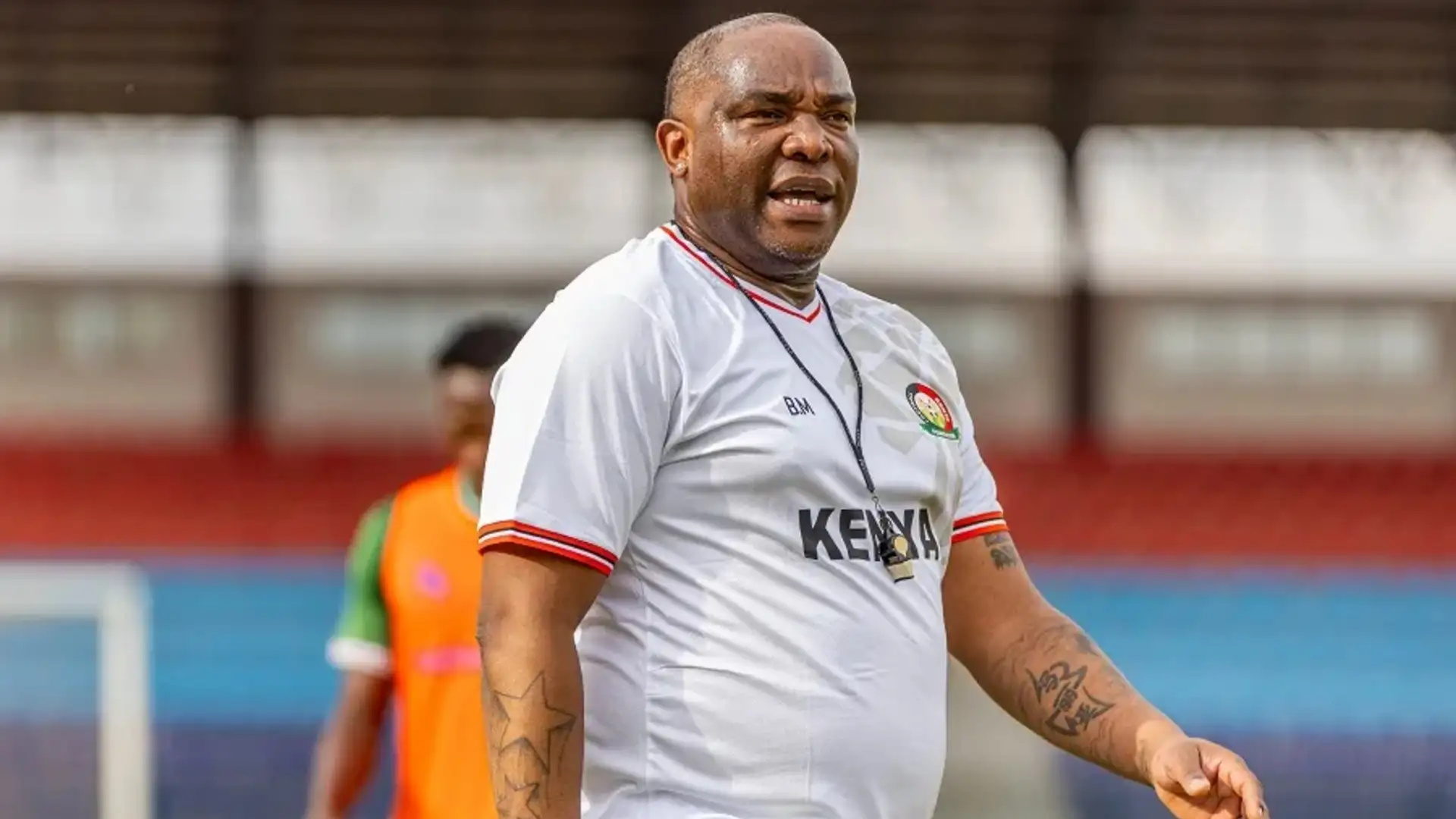
Kenya coach Benni McCarthy has revealed the tactical adjustment that helped the Harambee Stars recover from an early setback and secure a 2-2 draw against Bafana Bafana in Soweto.
The former South African international admitted that his team struggled to contain Bafana’s attacking threat down the flanks before he changed the defensive structure. According to McCarthy, the switch to a back three helped Kenya regain control, create more space and improve their possession.
The result at Orlando Amstel Arena was a significant response from Kenya after they fell behind through an unfortunate own goal, but McCarthy believes the tactical change played a major role in their recovery.
Bafana Bafana’s Full-Backs Caused Kenya Problems
Kenya initially struggled to deal with South Africa’s attacking movements, particularly the space created by the full-backs.
Bafana’s attacking players, including Oswin Appollis, Tshepang Moremi, Iqraam Rayners and Relebohile Mofokeng, were causing problems for McCarthy’s defence.
The situation became more difficult when Amos Wanjala scored an own goal to give South Africa the lead.
McCarthy admitted that the mistake forced him to reconsider his team’s tactical approach.
“Obviously we made that error, we gave away the opening goal and I had to change the system, which I don’t think they realised that I had changed the system,” he explained.
The Kenya coach identified Aubrey Modiba and the other South African full-back as particular threats, with Bafana repeatedly finding opportunities to attack from wide areas.
McCarthy’s Back-Three Switch Changed the Game
McCarthy’s response was to move Kenya into a back-three formation, using wing-backs to deal more directly with Bafana’s advancing full-backs.
The adjustment helped limit the space South Africa had been enjoying on the flanks and allowed Kenya to become more competitive in possession.
“We changed into a back-three and then the wing-backs occupied the full-backs, which I think they didn’t realise what hit them. Then we started having a bit of space and more possession and we were able to do what we did,” McCarthy said.
The tactical change proved important as Kenya gradually found their way back into the contest.
The Harambee Stars eventually scored twice, with Ryan Ogam grabbing a late equaliser to earn his team a valuable point against South Africa.
McCarthy Reflects on Kenya’s Performance
Despite being pleased with the result, McCarthy was not entirely satisfied with how his team controlled the match.
He felt the contest became too open at times, describing the football as being a little too much like basketball because of the end-to-end exchanges.
“I thought we played a good game of football, a little too basketball-like for my liking. I would like to have had more control of the game, especially when we went 1-1,” he said.
McCarthy also believed Kenya had handled several important situations well, particularly during the first half.
“At half-time I thought we were in the game well; we controlled most of the situations. In the second half Bafana came out, but I still thought we controlled the game and we managed most of the situations.”
Benni McCarthy Believes the Draw Was Fair
The Kenya coach was also measured in his assessment of the final result, acknowledging that both teams had opportunities to win.
“In the end I think it was a deserved draw for both teams. Whoever had won this game, I don’t think people would’ve been angry or said 2-1 was lucky, because I think over the 90 minutes both teams had their moments. Both goalkeepers really kept both teams in the game,” he added.
McCarthy admitted that he would have preferred to take all three points, but accepted that his team had to settle for a draw.
“I’m happy. I’m not sure it’s the result Bafana wanted, but at the end of the day it’s a football match and you’re the coach and you just want your team to win, but I wasn’t able to get it over the line.”
Bafana Bafana and Kenya Prepare for Nairobi Rematch
Attention now shifts to the return fixture on Tuesday, 17 November, at Nyayo National Stadium in Nairobi.
The second meeting presents another opportunity for McCarthy to test his tactical ideas against Pitso Mosimane, although the South African coach will now be aware of the adjustment that helped Kenya recover in Soweto.
For Bafana, the challenge will be finding ways to deal with Kenya’s back-three system while improving their attacking effectiveness.
McCarthy is hoping his players can build on the performance and produce a positive result on home soil.
“On Tuesday we have another opportunity and hopefully we will get something positive,” he concluded.
The first encounter ended level, but the tactical battle between McCarthy and Mosimane could make the Nairobi meeting even more intriguing.