







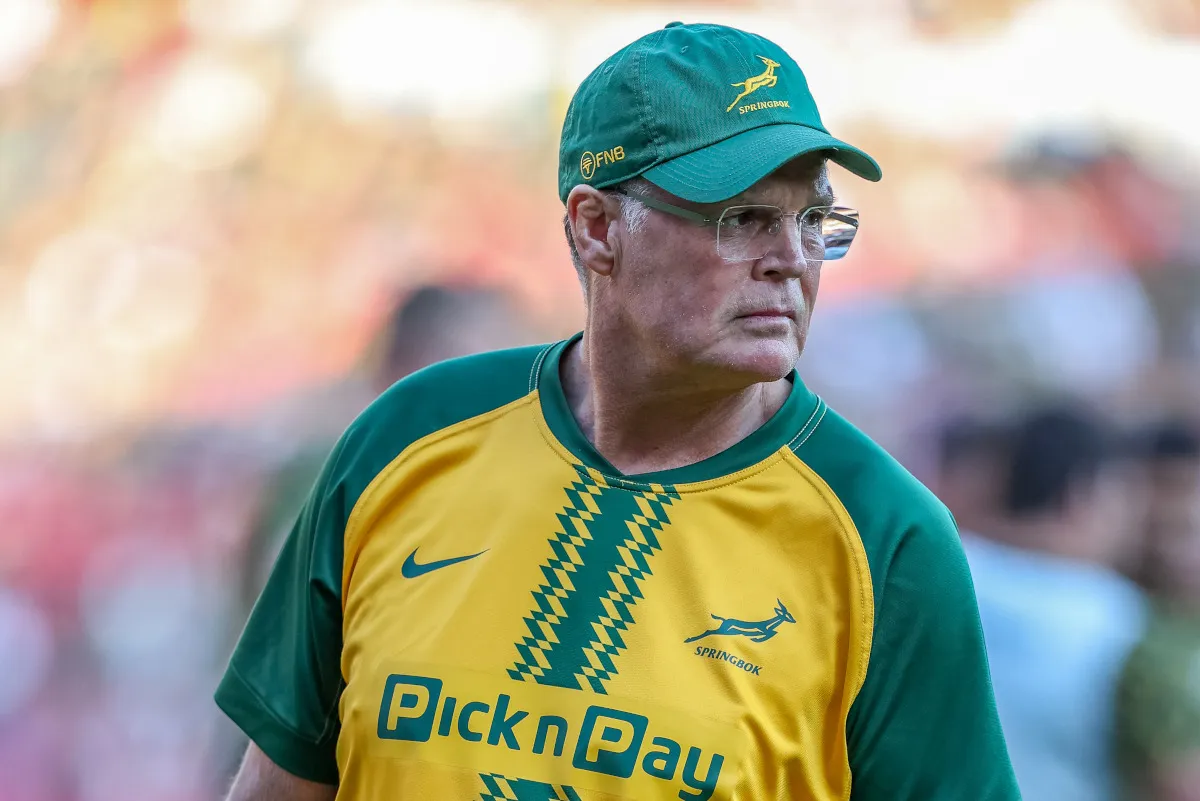
Springbok head coach Rassie Erasmus has been handed a six-match suspension by World Rugby following a disciplinary review of his public comments about match officials after South Africa’s Nations Championship clash against France.
The sanction takes immediate effect and represents a major development for the Springboks as they continue their international campaign.
An independent disciplinary panel ruled that Erasmus’s remarks amounted to serious misconduct under World Rugby’s Match Official Abuse Sanction Process, introduced in July 2026.
The decision follows a media conference in which the South African coach questioned the handling of several incidents during the defeat to France, particularly the role of the television match official (TMO).
Why World Rugby Suspended Rassie Erasmus
The independent panel assessed Erasmus’s comments under the governing body’s disciplinary framework for public criticism of match officials.
According to the ruling, the panel concluded that his statements went beyond ordinary criticism of refereeing decisions.
It found that the comments suggested match officials may have acted with bias or prejudice, or deliberately influenced the outcome of the match.
The panel also considered the wider impact of the remarks, including their timing, public reach and potential consequences for the credibility and reputation of match officials.
It ultimately determined that the statements represented an unacceptable attack on the integrity and competence of those responsible for officiating the game.
The six-match suspension was imposed following that assessment.
What the Six-Match Ban Means for Erasmus
The punishment goes beyond preventing Erasmus from coaching from the touchline.
During the suspension, he will be prohibited from having match-day involvement at international fixtures.
The restrictions include:
- Coaching the Springboks on international match days.
- Communicating directly or indirectly with players or team management on match days.
- Entering the stadium, coaches’ box, technical area or playing enclosure.
- Approaching or communicating with match officials.
- Taking part in match-official feedback processes.
- Carrying out media duties during the suspension.
The restrictions mean the Springboks will have to manage their international match-day operations without Erasmus’s direct involvement for the duration of the sanction.
Erasmus Has the Right to a Full Misconduct Hearing
World Rugby has reiterated that match officials must be able to perform their duties without intimidation, abuse or attacks on their integrity.
The governing body recognises that disagreements over refereeing decisions are part of professional rugby. However, it maintains that teams and coaches should use the appropriate channels to raise concerns rather than make allegations that could undermine officials’ credibility.
Importantly, Erasmus is entitled to have the matter referred to a full misconduct hearing.
The six-match suspension is therefore a significant disciplinary development, but the possibility of a further formal hearing remains part of the process.
Major Blow for the Springboks?
Erasmus’s absence from international match days could present a challenge for the Springboks, given his central role in the team’s preparation, tactical management and decision-making.
The coaching staff will need to ensure that the team remains organised and supported while the head coach is unable to participate in match-day activities.
The controversy also raises broader questions about how rugby authorities balance coaches’ freedom to criticise officiating with the need to protect match officials from personal attacks.
Do you believe World Rugby was justified in handing Rassie Erasmus a six-match suspension, or is the punishment too harsh?