









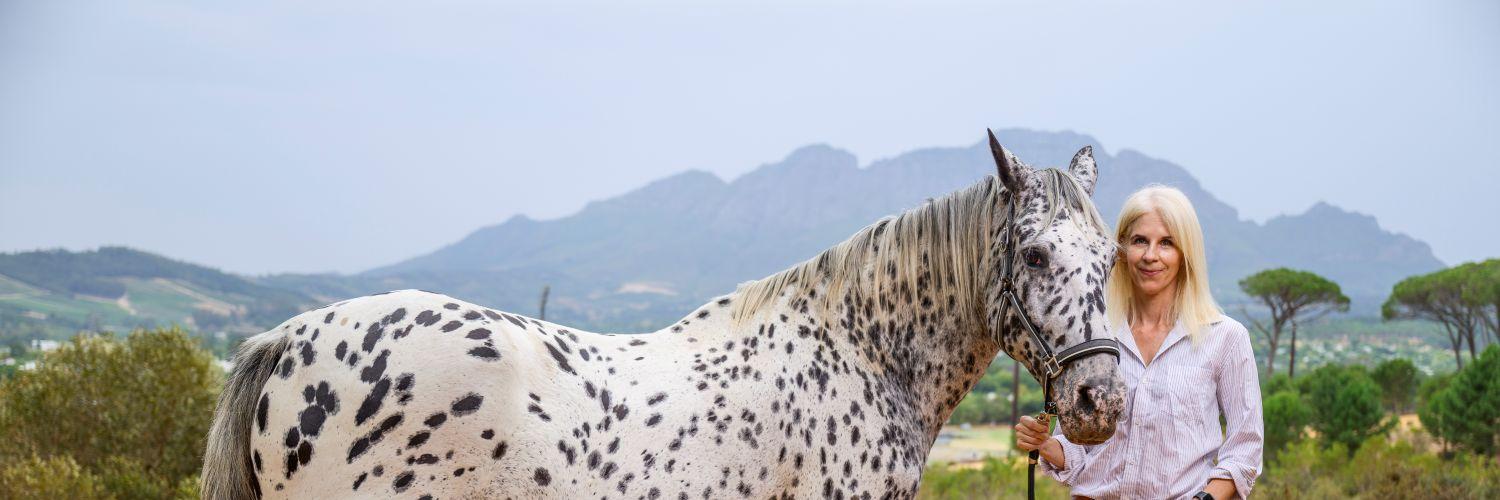
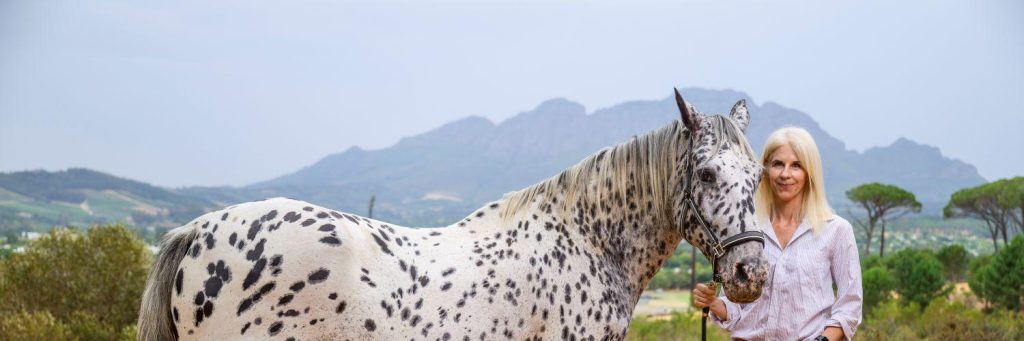
In the quiet paddocks of Stellenbosch University (SU), leadership training is moving out of the lecture hall and into the stable. Under the watchful eyes of two Appaloosa mares, Aztec and Voodoo, students and staff are discovering that true authority isn’t about titles or loud voices—it’s about presence, coherence, and connection.
Introducing HERD: Leadership Beyond the Hierarchy
The newly consolidated HERD (Human Embodiment, Relationality & Dynamics) programme is a research-informed initiative that reimagines leadership as a relational practice. Led by Prof Sandra Swart of the African Anthropocenes Research Centre, the project explores “ethical, non-coercive leadership” in a world that often feels overstimulated and disconnected.
“The world is often high-tech and disconnected,” says Prof Swart. “The HERD programme is designed to oppose those negative forces.”
Why Horses?
Horses are masters of non-verbal communication. They don’t care about your CV or your job title; they respond to your nervous system. In ground-based exercises, participants quickly learn that:
- Horses value coherence: If your internal feelings don’t match your external actions, a horse will sense the tension and disengage.
- Leadership is embodied: Success comes from stance, intention, and calm—not aggression or force.
- Vulnerability is a strength: Participants like student Cleo Saal have noted profound emotional breakthroughs, feeling “seen and heard” by the animals in ways humans sometimes struggle to achieve.
A Counter to the Digital Age
As we lean further into the era of AI and “gamified” learning, Prof Swart believes the authenticity of the HERD programme is its greatest asset. “This is how we defeat ChatGPT—by giving students and staff an authentic experience,” she emphasizes.
For women and those who feel like outsiders in traditional, often patriarchal leadership spaces, HERD offers a powerful alternative: confidence without aggression, and boundaries without force.
A Unique Pioneer
Stellenbosch University stands as the only institution in South Africa with the facilities to drive this specific kind of research and innovation. By blending ethology, history, and leadership science, SU is proving that sometimes, to move forward, we need to look to our oldest animal companions.