








For some university students in South Africa, getting through the academic year means making impossible choices between food, accommodation, study costs and basic necessities.
Students across the country have described skipping meals, depending on friends and turning to university assistance simply to get through periods of severe financial pressure.
Research by the University of the Western Cape indicates that student hunger at South African universities ranges from 30% to 65%, meaning that a significant proportion of students experience food insecurity at some point.
For students already struggling to cover tuition-related expenses, accommodation and everyday living costs, food is often the first expense to be sacrificed.
‘I can go an entire week without food’
One University of the Western Cape student described her situation as an ongoing cycle of financial hardship.
Her monthly expenses include sanitary products, toiletries and academic necessities such as printing, books and stationery. Unexpected medical expenses have added further pressure.
With limited money available, she said she is often forced to choose which necessities to prioritise — and food can end up taking the biggest hit.
The student said she can sometimes go an entire seven days without eating, highlighting the severity of food insecurity facing some students.
NSFAS delays leave students vulnerable
Another student at Stellenbosch University said he struggled to afford food between April and June after not receiving his R1,716 monthly NSFAS allowance.
Rather than asking his family for financial help, he turned to friends for food because his family was also experiencing financial difficulties.
Eventually, the university provided groceries for several weeks while the situation was resolved in June.
The experiences underline how quickly students can become vulnerable when financial support is delayed or insufficient.
Hunger is affecting academic life
Student hunger is not simply a question of missing meals.
University of Pretoria master’s student Nthuseng Mokoena said students cannot properly participate in academic life when they are hungry.
The impact can extend from concentration in lectures to a student’s ability to function on a daily basis.
Oscar Sithole, another University of Pretoria researcher and member of the Union Against Hunger, said food insecurity among university students is often hidden because of the perception that students belong to an economically privileged section of society.
Calls for stronger support
Advocates say universities and government need to treat students as a distinct and vulnerable group when addressing food insecurity.
Recommendations include annual campus-wide food-security surveys, incorporating food-security indicators into university reporting and establishing student food and nutrition councils.
There are also calls for NSFAS allowances to better reflect the cost of food and essential student expenses, alongside stronger partnerships between universities, government and the private sector.
In the longer term, advocates have proposed a dedicated national food and nutrition programme for students in higher education, modelled on the support provided through the National School Nutrition Programme.
Students are also helping students
Despite the scale of the problem, student-led initiatives are stepping in where formal support falls short.
At Nelson Mandela University, the SRC runs a Meal-A-Day campaign, providing students with one meal a day at selected residences during examination periods.
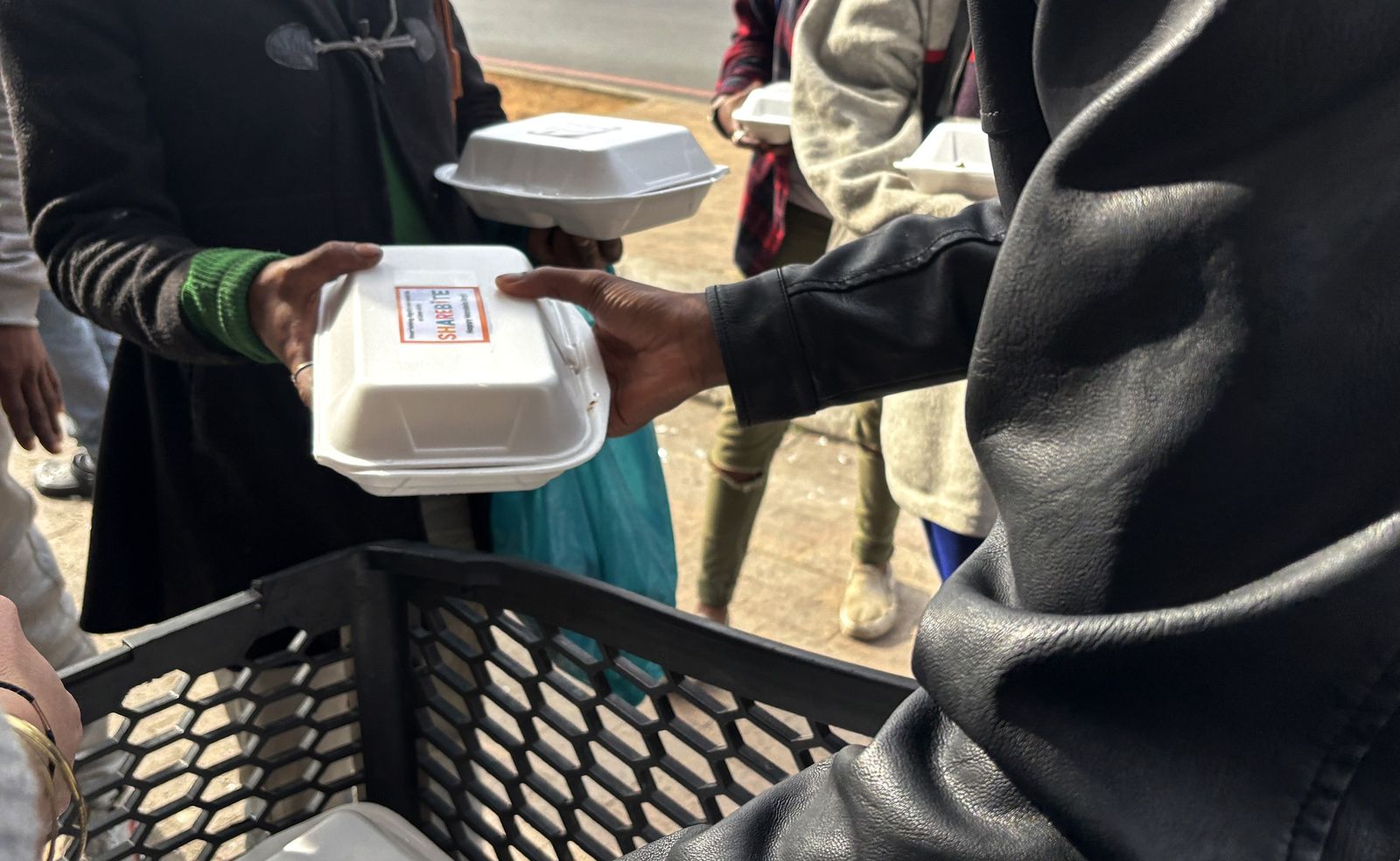
At Stellenbosch University, student-led organisation ShareBite runs initiatives including soup kitchens and food-parcel distributions.
ShareBite has collected basic food items such as maize meal, noodles, rice and canned goods, with plans to distribute food packs to 100 Stellenbosch University students.
But these initiatives also highlight the bigger challenge: student hunger is not an isolated problem that can be solved by occasional food parcels.
For thousands of students, access to food is directly connected to their ability to study, remain healthy and complete their qualifications.
How should South Africa address food insecurity among university students?