







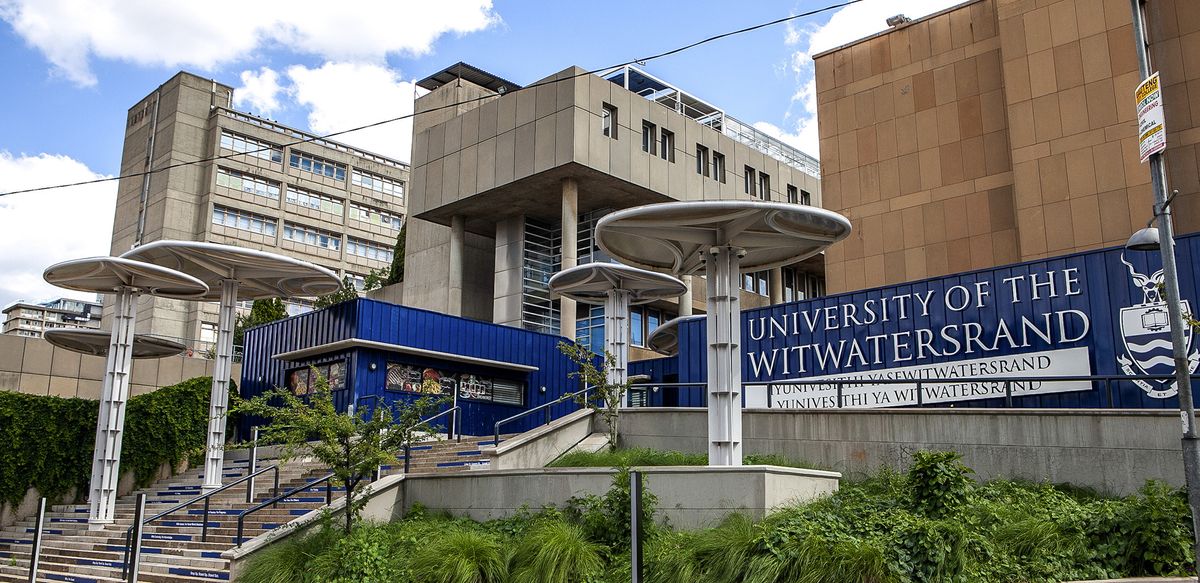
Wits University has rejected a viral claim that as many as 98% of its employees are foreign nationals, saying the figure is false and that international staff account for about 9% of its workforce.
The Johannesburg-based institution responded after allegations circulated widely on social media suggesting that Wits was favouring foreign nationals over qualified South Africans, including unemployed graduates.
In a statement, the university described the claims as misinformation and urged the public not to share content it said was intended to create division.
“Wits is aware of fake news being shared regarding the number of international staff employed at the University. The total number of international staff is, in fact, 9%,” the university said.
The institution also pushed back against suggestions that its internationalisation strategy undermines the development of South African talent.
Wits Defends Its Internationalisation Strategy
According to Wits, its approach is aimed at balancing the development of South African academic leadership with access to expertise from around the world.
The university said internationalisation should not be viewed as being in opposition to transformation or the employment of South Africans.
Its stated objective is to develop South African leadership while drawing on global expertise where it is considered necessary.
The clarification comes at a particularly sensitive time, with unemployment remaining one of South Africa’s biggest economic challenges and growing frustration among graduates struggling to enter the labour market.
Parliament Examines Foreign Appointments at Universities
While Wits has disputed the specific 98% claim, the broader issue of foreign appointments in higher education is already under scrutiny.
Parliament’s Portfolio Committee on Higher Education and Training has called for a seven-year investigation into the appointment of foreign nationals at universities.
The committee has indicated that it supports internationalisation but wants institutions to demonstrate compliance with South African employment legislation.
During engagements involving the Special Investigating Unit, the Department of Employment and Labour, the Department of Home Affairs and the Department of Higher Education and Training, issues surrounding work permits, study permits and labour-law compliance were discussed.
Committee chairperson Tebogo Letsie stressed that the investigation should not be interpreted as an attack on foreign academics.
Instead, he said the aim was to strengthen the post-school education system while ensuring universities comply with legislation such as the Employment Services Act and Employment Equity Act.
Foreign Nationals Account for 16% of Professionally Qualified University Population
Figures presented by the Department of Employment and Labour provide a broader picture of the composition of the professionally qualified workforce at universities.
In 2025, African senior managers accounted for 41.9% of the professionally qualified population at universities, followed by white employees at 25.3%, Indian employees at 10%, Coloured employees at 6.9% and foreign nationals at 16%.
These figures are distinct from Wits University’s own statement that international employees make up 9% of its total workforce, highlighting the importance of distinguishing between different datasets and categories when discussing foreign employment.
Unemployment Adds Pressure to the Debate
The controversy comes against the backdrop of South Africa’s worsening unemployment crisis.
The country’s official unemployment rate increased to 33.6% in the second quarter of 2026, up from 32.7% in the previous quarter, according to Statistics South Africa.
The number of unemployed people increased by 345,000 to approximately 8.5 million, while employment declined by 16,000 to about 16.7 million.
Those figures have intensified public concern over employment opportunities, particularly for graduates entering an already strained labour market.
Student Accommodation Also Under the Microscope
Parliament’s scrutiny extends beyond university recruitment.
The Portfolio Committee has also raised concerns about student accommodation and the management of funding intended to support students.
Committee chairperson Tebogo Letsie said student accommodation had become a lucrative industry and warned about alleged abuses involving payments for residences where students may no longer be staying.
The committee has backed stronger oversight of accommodation providers and supported the inclusion of the National Student Financial Aid Scheme in the accreditation process.
Investigations by bodies including the Special Investigating Unit and Public Protector into allegations of maladministration, corruption and other wrongdoing have further increased scrutiny of the higher education sector.
For now, Wits maintains that the widely circulated 98% foreign-staff claim is false. But the controversy has nevertheless reopened a much broader national conversation about internationalisation, employment equity, labour-law compliance and the role universities should play in developing South African talent.