








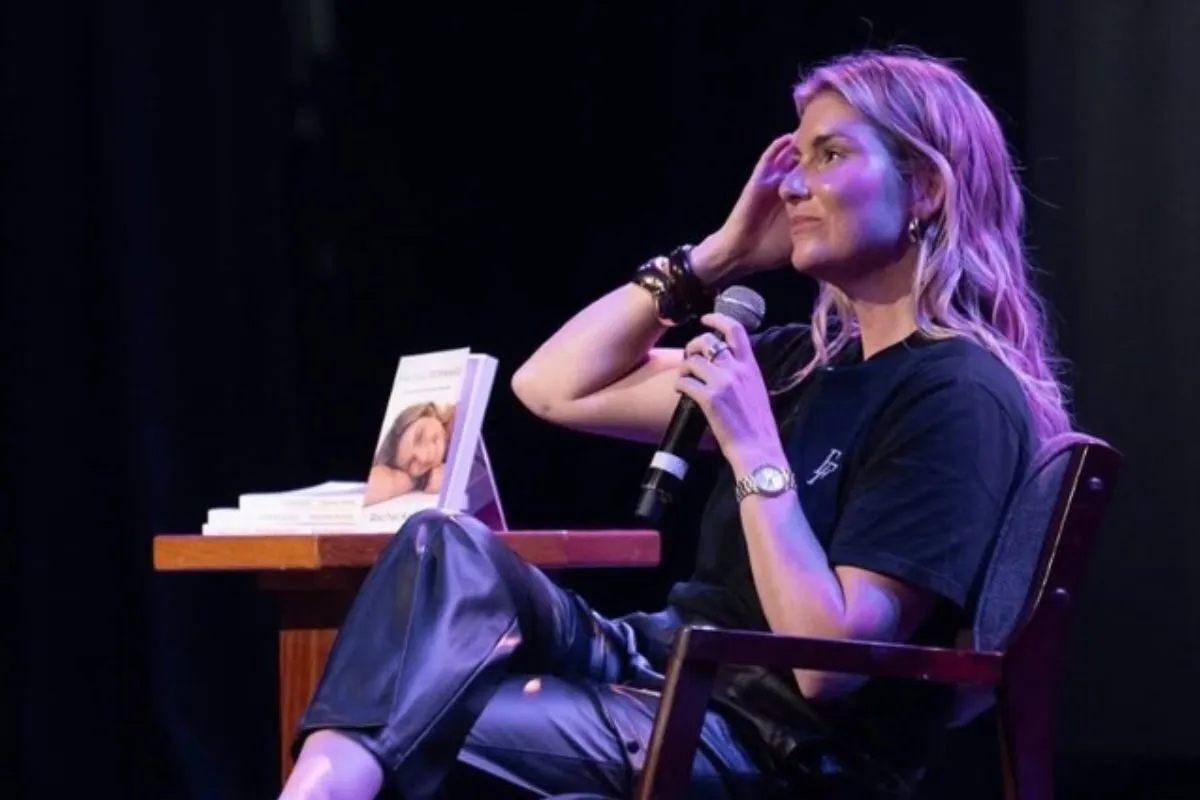
Rachel Kolisi has used her platform to encourage men across South Africa to have more honest conversations about gender-based violence (GBV), arguing that meaningful change requires men to confront the issue rather than remain silent.
The director and author shared her thoughts while reflecting on the ongoing crisis of violence against women in South Africa.
Her comments came amid reports that another body had been discovered in Ekurhuleni, east of Johannesburg, bringing renewed public attention to a series of disturbing cases in the area.
Rachel Kolisi Wants More Open Conversations
Rachel believes conversations around GBV cannot only happen when another tragedy dominates the headlines.
In a message shared alongside her work with the Falling Forward roadshow in the Eastern Cape, she called on men to speak openly with one another about the issue and examine their own role in creating safer communities.
Her central message was that discussions need to move beyond public statements and become part of everyday conversations among men.
She also emphasised that the victims of GBV should not become forgotten once media attention moves elsewhere.
‘Take Responsibility for Change’
Rachel highlighted the importance of remembering women whose deaths have received national attention, while also acknowledging the many victims whose stories may never become widely known.
Her message placed particular emphasis on male responsibility.
She urged men to challenge harmful behaviour and attitudes within their own circles and to take an active role in creating change.
For Rachel, spaces that allow these conversations to happen are an important part of that process.
She also expressed appreciation for platforms such as Falling Forward, where difficult subjects can be discussed openly.
The Wider Conversation Around GBV
Gender-based violence remains a major social issue in South Africa, with public figures, organisations and activists continuing to call for greater action and accountability.
Rachel’s intervention adds to a growing conversation about the role men can play in preventing violence and challenging attitudes that contribute to unsafe environments for women.
Rather than limiting the discussion to moments of national outrage, her message called for continued engagement even after individual cases disappear from the headlines.
Siya Kolisi Has Also Called on Men to Act
Rachel’s comments also come after her former husband, Springbok captain Siya Kolisi, made a similar appeal for men to take responsibility in confronting GBV.
Kolisi used his public platform to encourage sporting teams and other influential figures to speak out about violence in South Africa.
He also urged men to acknowledge their responsibility and consider how their actions, silence and willingness to educate themselves can influence future generations.
His comments included a personal reflection on the example men set for their children, particularly the responsibility to help create a different environment for the next generation.
A Conversation That Needs to Continue
Both Rachel and Siya’s public comments have placed the emphasis on men’s involvement in the fight against GBV.
For Rachel, that starts with honest conversations, challenging what men see around them and refusing to treat violence as an issue that can simply fade from public attention.
Her message is ultimately about keeping the conversation alive and encouraging men to take an active role in creating change.
What more can men, communities and public figures do to keep the conversation around GBV moving beyond social media and headlines?