





With South Africa’s football spotlight firmly fixed on Bafana Bafana, Banyana Banyana coach Desiree Ellis has raised an important question: is enough being done to develop women’s football in the country?
Ellis believes Banyana Banyana have achieved significant success despite the challenges facing the women’s game at grassroots and domestic level.
Her comments come as South Africa prepares for an important period of international football, with Banyana continuing their push for qualification for the 2027 FIFA Women’s World Cup.
Ellis wants stronger foundations for women’s football
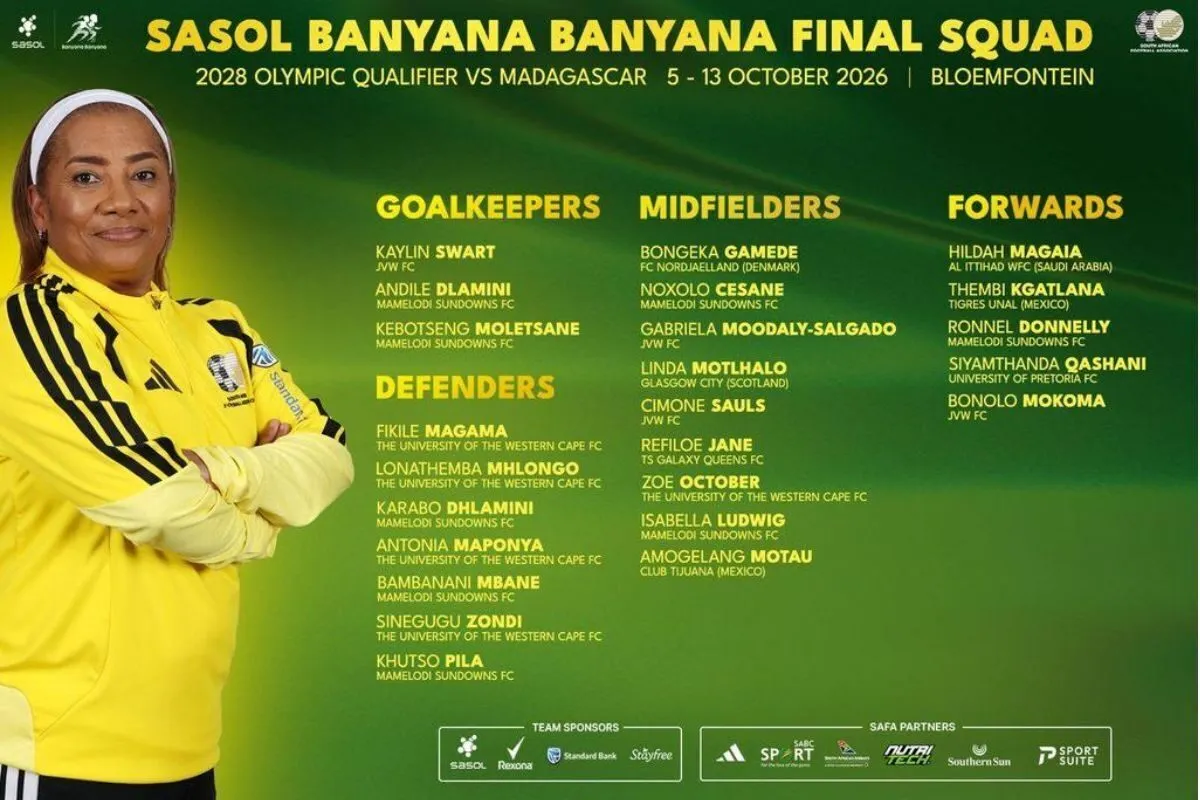
Speaking during the announcement of the Banyana Banyana squad for the upcoming Olympic qualifier against Madagascar, Ellis highlighted areas where she believes women’s football development can improve.
One of the key issues is the domestic league, which remains an important pathway for identifying and developing players for the national team.
The South African Football Association has announced changes to the women’s league structure from 2027, but Ellis believes there is still work to be done.
She also pointed to the need for greater development at school level, as well as stronger structures for referees and other football officials.
For Ellis, developing women’s football is about more than the national team. A stronger pathway from grassroots football through schools and domestic competitions could provide a broader foundation for future generations of Banyana players.
Banyana have continued to deliver on the international stage
Despite those challenges, Banyana Banyana have built an impressive record in recent years.
South Africa won the 2022 Women’s Africa Cup of Nations, defeating hosts Morocco in the final and securing qualification for the 2023 FIFA Women’s World Cup.
At the World Cup in Australia and New Zealand, Banyana reached the Round of 16, recording a memorable run before losing to the Netherlands.
They also reached the semi-finals of the 2024 Women’s Africa Cup of Nations, where they were narrowly beaten 2-1 by Nigeria.
At the 2026 Women’s Africa Cup of Nations, Banyana progressed to the quarter-finals before losing 2-1 to Morocco.
Their continued presence at major international tournaments has demonstrated the progress made by the national team, even as questions remain about the development of the wider women’s football system.
The next challenge: World Cup qualification
Banyana Banyana still have another opportunity to reach the 2027 FIFA Women’s World Cup.
South Africa are scheduled to face Chinese Taipei, Ecuador and Uzbekistan in the inter-confederation playoff route in November and December.
The matches will provide another test for Ellis’s squad as they attempt to secure a place at another major international tournament.
More than just a national team issue
Banyana Banyana’s achievements have helped raise the profile of women’s football in South Africa, but Ellis’s comments highlight the importance of building sustainable structures beneath the national team.
Investment in school football, grassroots programmes, domestic competitions, coaching, refereeing and player development could play an important role in creating a stronger pipeline of talent.
Bafana Bafana’s success deserves its place in the spotlight, but Banyana Banyana’s achievements also tell an important story about South African football.
The question now is how much further the women’s game could progress with stronger and more consistent development structures behind it.
Do you agree with Desiree Ellis that more attention and investment should go into developing women’s football in South Africa?