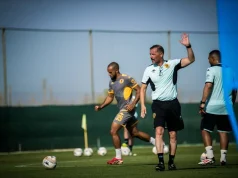










The Amakhosi locker room is under the microscope, and this time, the critique is coming from inside the house. Itumeleng Khune, the long-standing guardian of the Kaizer Chiefs goal, has sparked a massive debate across South African football by taking aim at the club’s recent management strategies.
His message is clear: Familiarity is killing discipline at Naturena.
The Psychological War: “Friend” vs. “Commander”
Khune’s comments highlight a deep-seated psychological hurdle in professional sports—the transition from being a “player-friendly” assistant to a “stern” head coach. According to the veteran keeper, the current trend of promoting assistants or using co-coaches is backfiring because of the established social dynamics.
1. The Distance of a Head Coach
A traditional head coach often acts as an outsider. This “fear factor” isn’t about bullying; it’s about authority. When a coach maintains a professional distance, players understand that their performance is the only currency that matters.
2. The “Assistant Coach” Dilemma
Assistant coaches are traditionally the “good cops.” They joke with the squad, offer a shoulder to lean on, and bridge the gap between the players and the “Big Boss.”
“Assistants will be more lenient and joking with players, and then as soon as they take over… players tend not to take them seriously.” — Itumeleng Khune
The Core Issues: Why Co-Coaching Isn’t Working
When the lines of authority are blurred, Khune suggests that three major problems arise within the squad:
- The Loss of Fear: If a player feels they are “friends” with the coach, they are more likely to push boundaries, show up late, or slack off in training, assuming their relationship will protect them.
- Tactical Weight: Tactical instructions carry less weight when they come from someone you were joking with five minutes ago. In high-pressure matches, players look for a leader, not a peer.
- The Transition Gap: Moving from a “lenient” role to a “serious” one is nearly impossible without changing the personnel. Khune’s stance suggests that once a coach is labeled a “friend,” they can never truly be the “commander.”
Management Under Fire
Khune’s critique is a direct jab at the Kaizer Chiefs management. By opting for internal promotions or co-coaching setups, the board may be inadvertently creating a “soft” environment where accountability is secondary to comfort. For a club desperate to return to its trophy-winning glory days, Khune’s “Breaking News” suggests that a “Hard-Nosed Outsider” might be the only cure.