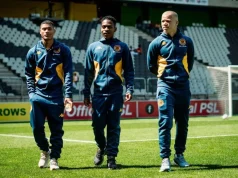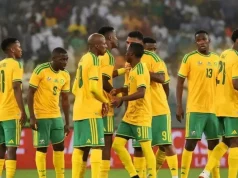






Bafana Bafana appear to have the foundations of a potentially exciting generation of South African footballers.
The challenge now is turning that promise into sustained success.
South Africa recently qualified for the FIFA World Cup for the first time in 16 years and went a step further by reaching the knockout stages for the first time in the country’s history.
Former coach Hugo Broos deserves credit for laying much of the groundwork. The task has now passed to Pitso Mosimane, who has the opportunity to take that foundation and build something bigger.
Mosimane has not radically changed the squad in his opening games, but his approach and ideas will become clearer as his tenure develops.
His first competitive match ended in a 2-1 victory over Guinea. The result was important, but the bigger question is whether Mosimane can gradually establish a recognisable identity while continuing South Africa’s progress.
A young generation is emerging
There are plenty of reasons for optimism.
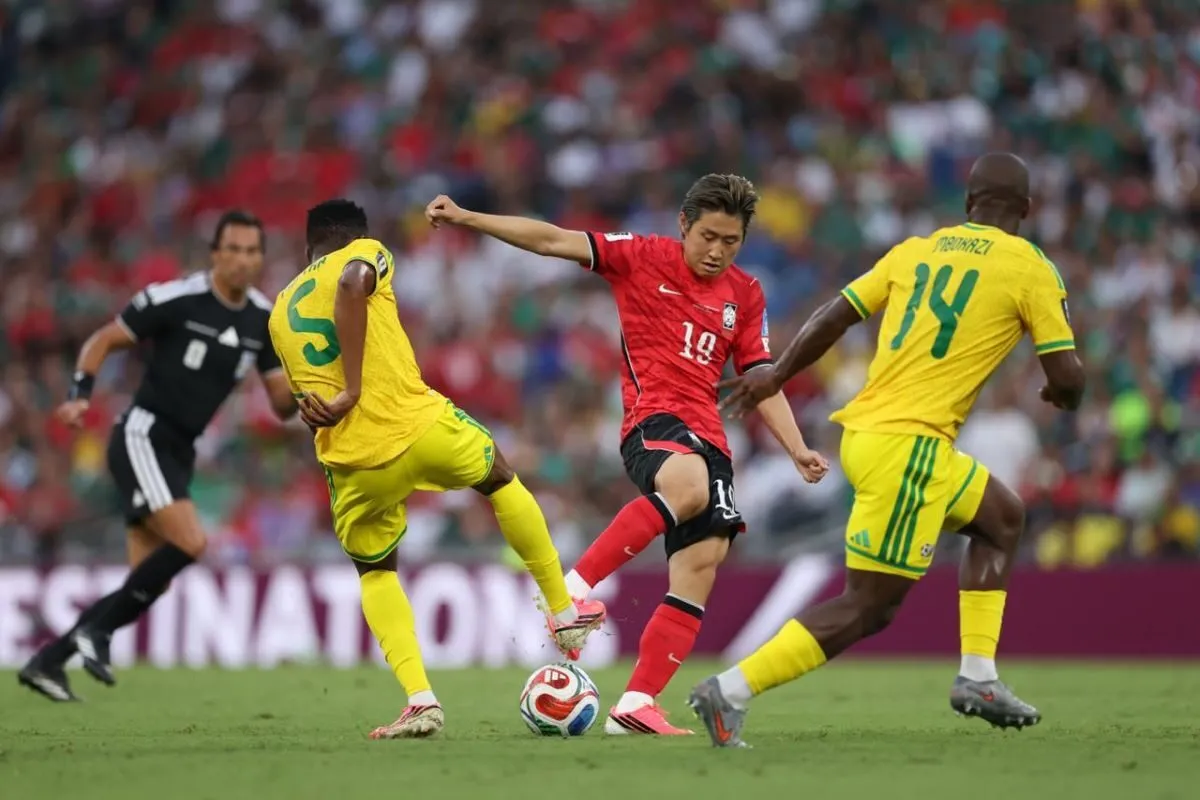
Several young South African players are already attracting attention beyond the domestic game, including Thapelo Maseko, Relebohile Mofokeng, Mbekezeli Mbokazi and Ime Okon.
All four are under 22 and currently playing outside South Africa, giving them valuable exposure to different football environments.
Their development will be worth monitoring as they look to establish themselves and potentially earn moves to bigger European clubs.
The defensive pool is equally encouraging.
Mbokazi, Olwethu Makhanya, Khulumane Ndamane, Lebone Seema and Okon are all young options, while Aden McCarthy has already gained UEFA Champions League experience.
That level of competition for places could become increasingly important for Bafana.
Midfield remains the biggest question
If there is one area that requires particular attention, it is the midfield.
Teboho Mokoena remains one of South Africa’s key central midfielders, but Bafana have shown they can compete without him.
Thalente Mbatha offers another option, although there are questions about how effectively the two can complement each other when deployed together.
Sphephelo Sithole provides defensive solidity, but the midfield could still benefit from a more aggressive ball-winning presence.
That could lead to some interesting experimentation.
Mbokazi has primarily developed as a defender, but his physical qualities could potentially make him an option in a more defensive midfield role. Whether that becomes a realistic avenue remains to be seen.
Mofokeng and the attacking options
Further forward, Bafana have a collection of young attacking players capable of giving opponents problems.
Relebohile Mofokeng is likely to be used in an attacking midfield role, where his creativity and technical ability can have the greatest impact.
His physical profile, however, means asking him to perform the duties of a traditional ball-winning midfielder would be a very different proposition.
There are also exciting possibilities emerging at club level.
Young Kaizer Chiefs midfielder Steven Mendes is one player who could potentially develop into a future national-team option, provided he continues to progress and earns opportunities at senior level.
On the wings, South Africa have plenty of choices.
Thapelo Maseko, Mofokeng, Oswin Appollis, Mohau Nkota, Puso Dithejane and Shandre Campbell all offer pace and attacking ability, and none are over 25.
That gives Mosimane several different combinations to work with.
Finding the missing striker
The biggest concern in attack may not be the supply of chances, but converting them.
South Africa have plenty of pace and creativity in wide areas, which could allow a central striker to benefit from the service.
Players such as Cassius Mailula, Iqraam Rayners and Evidence Makgopa provide different options depending on the tactical approach.
But finding one or two consistently productive strikers could take this attack to another level.
Can Mosimane turn potential into success?
The ingredients are there.
South Africa have young players gaining experience overseas, a growing pool of defenders, exciting wingers and established midfielders.
The next step is developing those individual talents into a balanced national team.
Mosimane’s challenge will be finding the right blend of youth and experience while maintaining the progress made under Broos.
If that process succeeds, South Africa could eventually have a squad containing a significant number of players competing in European leagues and continental competitions.
But potential alone does not create a golden generation.
The development of the midfield, the emergence of reliable goalscorers and the continued progression of the country’s young players will be crucial.
Bafana Bafana have the foundation. The question is whether Mosimane can turn it into something lasting.