






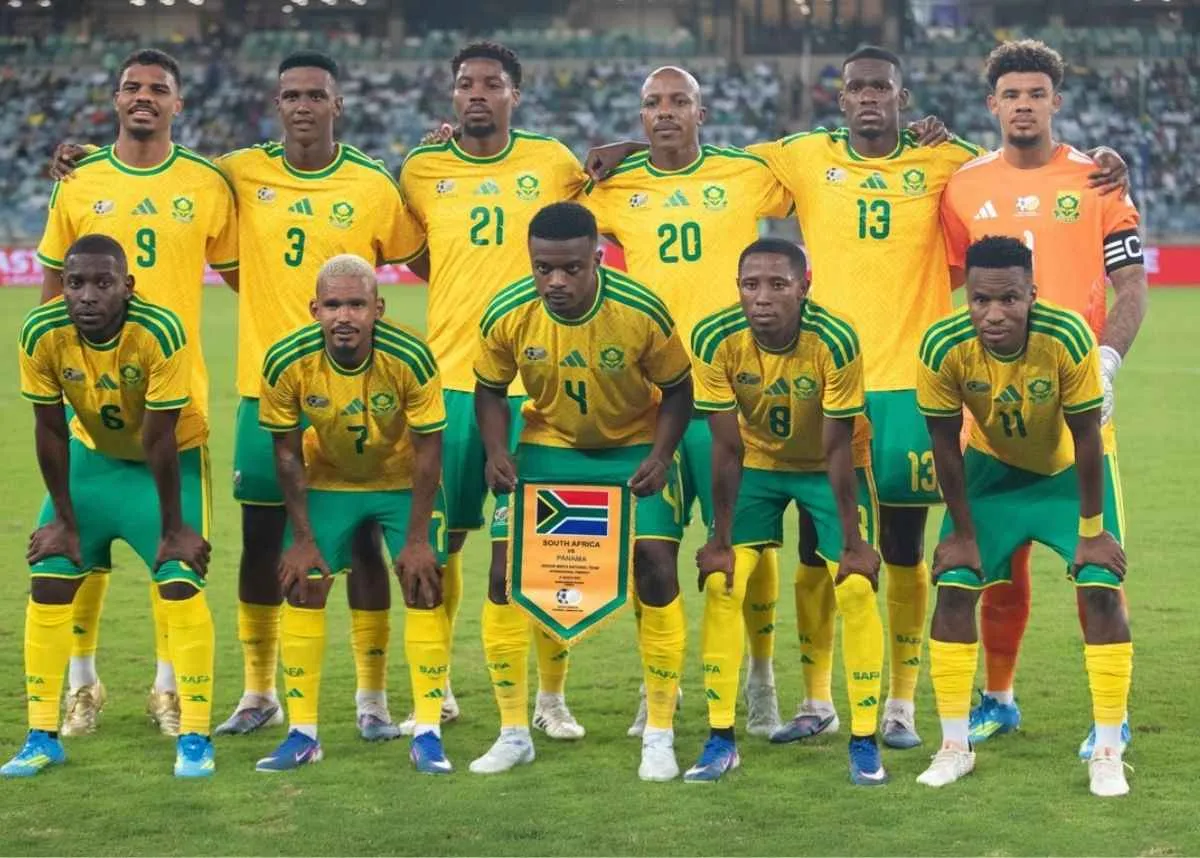
Bafana Bafana’s 2026 FIFA World Cup campaign started with a bitter pill to swallow after a 2-0 defeat to co-hosts Mexico at a roaring Estadio Azteca. While El Tri were far from a flawless, clinical powerhouse on the night, Hugo Broos’ men ultimately engineered their own downfall.
Between structural rigidity, individual errors, and a complete second-half disciplinary meltdown that saw Mzansi finish with nine men, the flaws were glaring. Here is a tactical breakdown of the five key reasons why Bafana Bafana fell short on football’s grandest stage.
1. A Conservative, Overly Defensive Blueprint
From the first whistle, Hugo Broos’ starting lineup looked designed to survive rather than compete. By stacking the pitch with defensive-minded profiles, Bafana completely stripped themselves of their greatest asset: vertical transitional speed. Once Mexico grabbed the early lead, South Africa was left completely structurally unequipped to chase the game, leaving striker Lyle Foster isolated on an island upfront.
2. Playing Directly Into Mexico’s High-Press Trap
Mexico’s primary tactical weapon is their aggressive, high-intensity front press. Instead of adjusting to the altitude and the raucous crowd by playing more direct long balls into space, Bafana stubbornly insisted on over-playing short passes out from the back. This exact structural rigidity triggered the game-winning error when a heavy touch from Sphephelo Sithole inside the defensive third allowed Julián Quiñones to pounce and score in the eighth minute.
3. Passive Management & Delayed Half-Time Changes
When a tactical blueprint fails in the first 45 minutes, elite managers pivot at halftime. It was painfully obvious that the midfield engine room was overwhelmed and that the wings lacked bite. Leaving struggling players on the pitch instead of immediately introducing the explosive creativity of Relebohile Mofokeng or Oswin Appollis at the break allowed Mexico to dictate the tempo entirely unchallenged.
4. Fundamental Errors in Passing and Marking
At World Cup level, technical deficiencies are brutally punished. Usually reliable stars like Teboho Mokoena, Khuliso Mudau, and Jayden Adams repeatedly misplaced basic passes under standard defensive pressure. Defensively, structural lines dissolved, leaving massive pockets of space for Raúl Jiménez to comfortably exploit—culminating in his completely unmarked back-post header to make it 2-0.
5. Wasteful and Toothless Set-Piece Delivery
When you are completely starved of open-play chances as an underdog, set-pieces become your ultimate lifeline. Yet, every single corner and free-kick opportunity South Africa earned was ruined by heavy-handed delivery or poor aerial movement. The Mexican backline easily cleared the predictable crosses, ensuring goalkeeper Rangel didn’t have a single serious save to make all evening.
The Disciplinary Fallout
To add insult to injury, the tactical frustration boiled over into an absolute disciplinary nightmare. Straight red cards for both Sphephelo Sithole and veteran maestro Themba Zwane mean Hugo Broos will be missing core components of his spine for the must-win clash against the Czech Republic on June 18th.